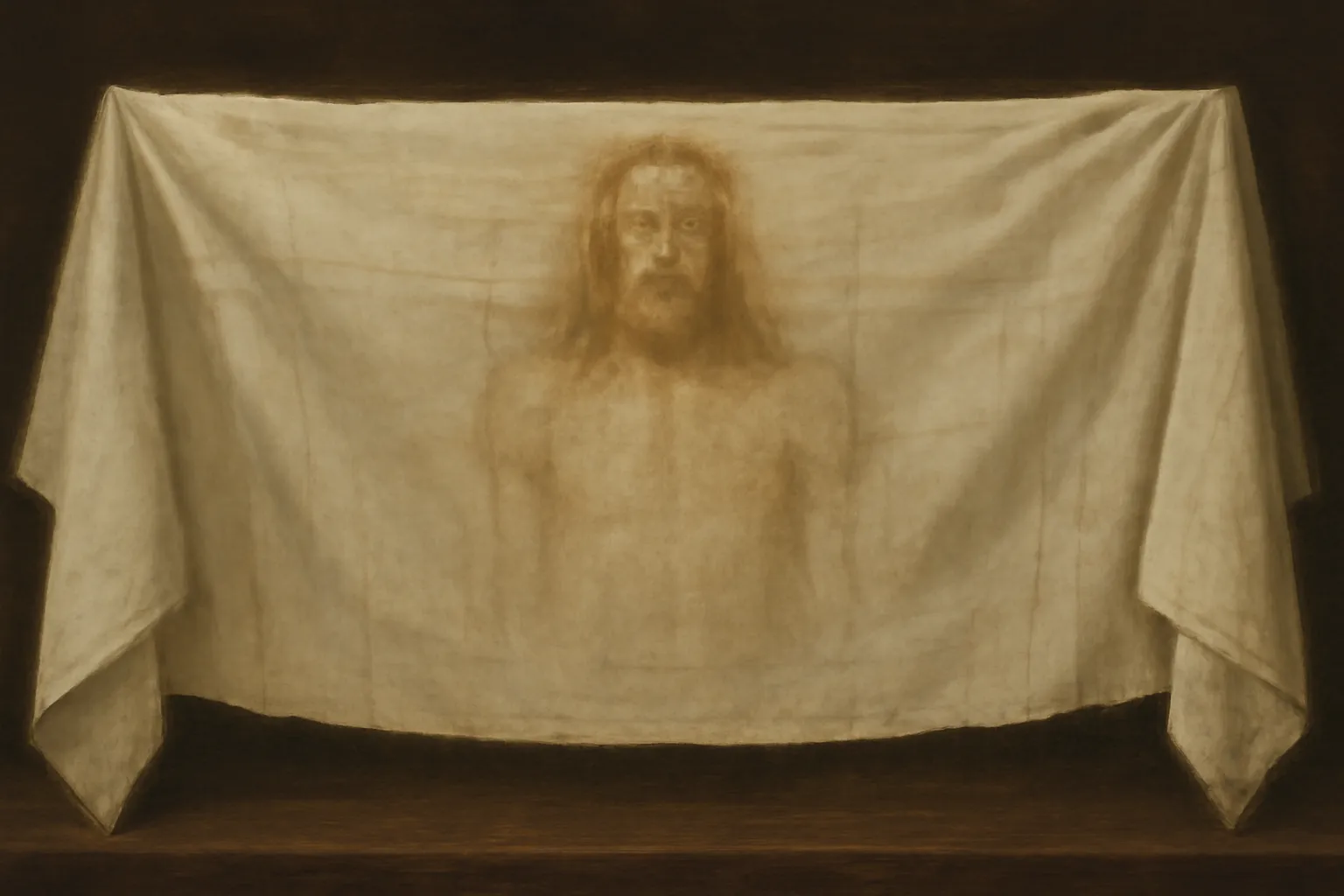
The term Christ Cloth refers to a broad category of textiles that are traditionally associated with Jesus Christ in Christian history and devotion. These fabric artifacts—whether called holy cloth, Shroud, sudarium, or Veil—serve as material reminders of the life, crucifixion, and resurrection narrative central to Christian faith. While many of these cloths are revered within specific communities, the common thread binding them is the belief that they either wrapped or bore the features of Jesus during pivotal moments of the gospel story. In contemporary discussions, the phrase “Christ cloth” can describe everything from legendary relics discussed in medieval chronicles to modern textile objects used in worship, study, or museum display.
Throughout this guide, you will encounter variations on the term—such as Christ’s cloth, the cloth of Christ, holy fabric, and relic textile—each reflecting a slightly different emphasis: devotion, artifact status, or scholarly inquiry. Regardless of the exact phrasing, the central idea remains the same: a sacred piece of cloth that connects believers to the historical or legendary presence of Jesus through material culture.
In the pages that follow, you will discover not only the meaning assigned to these fabrics by faith communities but also their historical trajectories, the kinds of objects that are categorized as Christ cloths, and the practical ways these textiles influence worship, study, and public understanding today.
Historical overview: origins, development, and core examples
To appreciate a Christ cloth, it helps to situate it within a broad historical arc. Textiles as carriers of memory were central in ancient, medieval, and early modern religious life. The idea that a physical piece of cloth could convey the presence or honor of a divine figure has deep roots in scripture, legend, and liturgical practice. Over centuries, specific cloths came to be identified with Jesus in particular ways, taking on distinct meanings in different cultures.
Ancient and patristic foundations
In the earliest Christian communities, the association between Jesus and cloths is evident in Scripture and liturgy. The burial shroud itself, sometimes called the Shroud of Jesus in popular imagination, became a symbol of anonymity and reverence in apocryphal and later medieval sources. Meanwhile, the practice of venerating cloths as standing in for the living presence of Christ grew in devotion-centered settings. These beginnings laid the groundwork for later credence given to specific cloths as lasting memorials.
Medieval reverence and the surge of relic culture
During the Middle Ages, the Christian world developed an especially robust culture of relics. Relic textiles—cloths said to have touched or wrapped Jesus or other sacred objects—were housed in churches and pilgrimage churches, described in hagiographies, and depicted in medieval art. The Shroud and related textiles entered the imagination of the faithful as tangible signposts of Christi ancestry and divine favor. Pilgrimage routes to sites housing these cloths flourished, and reverence for such pieces supported charitable and devotional networks across Europe and the Near East.
Early modern transformations and the age of inquiry
In the late medieval to early modern period, interest in Christ cloths began to merge with the growth of science and skepticism. The rise of textile analysis, dating methods, and historical criticism prompted a more nuanced conversation about authenticity, provenance, and interpretation. Iconographic depictions, forensic-like studies of fiber composition, and documentary research all contributed to a more complex understanding of how such fabrics fit into the broader history of Christian devotion.
Key variations and notable examples
Across Christian traditions, several distinctive cloths have become prominent as symbols of Jesus. Some are commonly labeled as Christ cloths in scholarly or popular writing, while others occupy more specialized devotional niches. Here are some of the most influential examples, described with attention to their meaning, origin, and current status:
Shroud of Turin (traditional name for the burial cloth associated with Jesus by some believers). This textile—kept in Turin, Italy—has generated extensive scientific, theological, and popular interest due to debates over dating, image formation, and its role in faith and pilgrimage.
Sudarium of Oviedo (the face cloth said to have covered Jesus’ face at burial). Preserved in Oviedo, Spain, this cloth is often considered in relation to the Shroud as part of a paired set of relics tied to the same biblical events.
Veil of Veronica (also called the Holy Face). According to tradition, a cloth bearing the image of Christ’s face was miraculously imprinted on Veronica’s veil in a moment of compassion as Jesus carried the cross. Though shrouded in legend, the Veil of Veronica remains a potent symbol in Western Christian devotion.
Holy Face cloths and other regional devotional textiles. Various churches and communities preserve smaller vestments, napkins, or handkerchiefs believed to have miraculous associations with Christ or to have touched his relics.
Image-bearing linens and liturgical textiles. Beyond famous relics, many churches house fabrics used in the liturgy that carry symbolic meaning—colors, textures, and inscriptions that evoke the life of Christ and the rhythms of the Christian year.
In addition to the canonical or widely recognized examples, the landscape of holy cloths includes many locally revered textiles. These may be associated with regional legends, patron saints, or particular miracles. In some communities, such cloths function as focal points for processions, healing rituals, or catechetical storytelling, demonstrating how a textile can become a living conduit of memory.
Across Christian traditions, the practice of venerating or commemorating a Christ cloth serves several interlocking purposes. It can be a reminder of the Incarnation and Passion; a tangible connection to biblical events; a focal point for prayer and contemplation; and a pedagogical tool for teaching the gospel story. The meaning of a given fabric often reflects the local theological emphases, liturgical practices, and devotional psychologies of the community that holds it.
Symbolism: material incarnation and memory
Textiles are inherently tactile and intimate objects. When a cloth becomes associated with Christ, it invites believers into a sensory encounter with the sacred: touch, color, weave, and scent may all become part of the devotional experience. The Christ cloth thus functions as a conduit for memory—an anchor in time that helps present worshippers enter the gospel narrative more vividly.
Devotional practice and public devotion
In many communities, the cloth is central to processions, veneration during Holy Week, or special feast days. A holy cloth can lead to acts of intercession, prayers for healing, or communal storytelling through ritual. Yet, the meaning is not merely theatrical: for many adherents, such cloths embody a sense of God’s ongoing presence in the world and in the lives of believers.
Authenticity, science, and critique: how scholars engage with Christ cloths
Because textiles are physical objects with long histories, they invite a mix of reverence, curiosity, and critical examination. The relationship between faith-based meaning and material evidence has produced robust academic conversations in theology, history, archaeology, and conservation science.
Preservation and conservation challenges
Wear, environmental exposure, and handling over centuries can degrade textiles. Conservators study the fibers, dyes, weave patterns, and structural integrity of cloths associated with Jesus to develop appropriate preservation protocols. The goals are twofold: to protect the material and to enable ongoing educational and devotional use without compromising its integrity.
Dates, provenance, and authenticity debates
One of the most debated topics in the realm of Christ cloths is authenticity. Radiocarbon dating, historical documentation, and textile analysis have been used to place cloths within certain timeframes or to question traditional claims. Debates often involve nuanced interpretive questions: how to weigh documentary evidence against scientific findings, how to handle fragmentary artifacts, and how to present uncertainty to a faithful audience without diminishing the object’s significance.
Practical uses today: education, devotion, and culture
In the 21st century, the concept of the Christ cloth has expanded beyond churches and museums into a broader cultural context. This expansion has yielded a wide range of practical applications that support education, spiritual life, and public engagement with sacred history.
Educational programs in churches, universities, and museums that use textile artifacts to teach about ancient technologies, biblical history, and religious practice. Students can explore fiber chemistry, dye techniques, and preservation science while learning about the spiritual significance of these fabrics.
Public exhibitions and travels that bring the textures of early Christian devotion to diverse audiences. Curated displays often pair cloths with paintings, sculptures, and manuscripts to tell integrated stories about faith, memory, and material culture.
Devotional spaces and personal prayer routines that incorporate a holy cloth into meditation, contemplation, or liturgical reflection. For many, handling or viewing the cloth becomes an act of reverence and focus.
Liturgical planning and seasonal observances. Some churches design services and vestment choices to reflect the symbolism associated with Christ cloths, aligning color, motif, or motif with the narratives of Advent, Lent, and Easter.
Artistic inspiration for writers, filmmakers, and designers who seek to evoke the mood and messages of Christ-centered textiles without relying on literal relics. Cloth-based imagery—woven patterns, textures, or symbolic embroidery—can enrich storytelling and interpretation.
Conservation science education for students and professionals who want hands-on experience with textile analysis, imaging techniques, and non-destructive testing while learning about religious artifacts’ care.
Practical guidance for institutions and individuals
When institutions handle any cloth with sacred associations, careful planning is essential. Here are some practical guidelines that reflect best practices in both devotion and scholarship:
Develop clear interpretive labels that explain the textile’s history, its religious significance, and the scope of scientific uncertainty where applicable.
Maintain documented conservation records and a routine climate-control plan to minimize deterioration.
Offer opportunities for public education about historical context, debunking myths while respecting devotional commitments.
Respect cultural sensitivity when presenting artifacts to diverse audiences, acknowledging that different communities may hold varying beliefs about relics and miracles.
Engage in ethical storytelling that distinguishes between belief, tradition, and verifiable history, to help visitors critically understand what they see without diminishing awe or faith.
Care, preservation, and authentication: a practical primer
For anyone responsible for a Christ cloth—whether it is a high-profile relic or a modest devotional textile—careful preservation is essential to ensure its survival for future generations. This section outlines fundamental considerations related to handling, storage, and verification.
Handling and display
Excessive handling can accelerate wear. Museums and religious institutions typically adopt gloves, padded supports, and controlled display cases. When possible, use anti-static mounts and UV-filtering glass to reduce light damage. Written protocols should specify how staff and volunteers may interact with the cloth, including the minimum person-to-item contact and the use of soft brushes for gentle cleaning when appropriate.
Environment and climate control
Textiles are sensitive to humidity, temperature, and pollutants. A general guideline is to keep the environment stable, with moderate humidity and cool, steady temperatures. Excessive fluctuations can cause fibers to become brittle or to shrink and distort. Packaging and storage should minimize dust ingress and provide archival-quality materials that do not off-gas harmful substances.
Authentication and provenance
Provenance research combines archival documents, stylistic analysis of weave and dye, and, where possible, non-invasive imaging. Any claims about dating or origin should be presented with transparent notes about margins of uncertainty. Collaboration among theologians, historians, conservators, and scientists helps ensure that interpretations remain nuanced and responsible.
Myths, controversies, and critical thinking
Because Christ cloths occupy a space between faith, heritage, and science, they naturally attract debate. A thoughtful approach blends reverence for religious devotion with an insistence on evidence-based inquiry. Here are some recurring themes and how to approach them:
Myth versus documentation: Many legends about holy fabrics outpace surviving records. Address them by distinguishing between belief and empirical evidence, while honoring the spiritual significance the cloth holds for believers.
Dating disputes: Carbon dating and newer analytical methods can yield different results from traditional chronologies. Highlight the limits of each method and the consequences for interpretation.
Relic ethics: The treatment of relics touches on questions of ownership, accessibility, and cultural sensitivity. Institutions should balance scholarly access with devotional respect and the rights of communities connected to the artifacts.
Popular culture and commodification: The modern demand for sacred textiles must be navigated with care to avoid trivialization or exploitation of sacred objects for commercial purposes.
Glossary: terms you’ll encounter when studying Christ cloths
Because this topic spans theology, history, and conservation science, terms can be specialized. Here are concise definitions to help readers navigate discussions:
Sudar: A cloth believed to have covered the face of Jesus after burial; often discussed in conjunction with the Shroud as a related relic.
Shroud: A large sheet or textile believed by some to have wrapped Jesus’s body after burial; its authenticity remains a topic of intense debate.
Relic textile: A fabric regarded as holy due to its association with holy figures, saints, or events, regardless of whether it is a direct contact with Jesus.
Veneration: A religious practice involving reverent honor toward sacred objects, often including prayer, processions, or display in liturgical settings.
Provenance: The documented history of an artifact’s ownership and its movement over time, essential for understanding authenticity and context.
Conservation: The field of preserving and stabilizing artifacts to prevent deterioration while maintaining historical integrity.
Case study snapshots: how different communities engage with Christ cloths
To illustrate the diverse ways these fabrics matter, consider three brief snapshots that reflect distinct approaches: devotional practice, museum curation, and scholarly inquiry.
Devotional practice in a regional church
In a small parish with a venerable cloth linked to local martyrdom legends, the textile serves as a center for annual rituals. The community organizes a procession, a brief catechesis for children, and a moment of silent prayer before the cloth is returned to its shrine. The emphasis is not on scientific scrutiny but on spiritual encounter, memory, and communal identity. The cloth’s symbolic power is its ability to anchor a shared story of faith in living practice.
Museum display paired with educational programming
A regional museum curates an exhibit about the role of holy fabrics in early Christian devotion, including a cloth with claimed ties to the gospel narratives. The display combines textual labels, high-resolution imagery, and interactive modules about textile technology and historical context. Curators invite conservators, theologians, and educators to participate in panel discussions that explore how belief and evidence inform public understanding of sacred objects.
Scholarly inquiry in textile studies
A university research team analyzes fiber composition, dye sources, and weave structure of a contested relic fabric. Through non-destructive imaging, researchers map microstructural patterns, comparing them with known historical textiles from the period. The aim is not to prove or disprove pious claims but to situate the cloth within its historical ecosystem, identify origin patterns, and assess preservation needs. The findings enrich understanding of trade routes, material culture, and regional religious practices during the relevant era.
the enduring significance of Christ cloth in belief and culture
Across centuries and continents, the idea of a Christ cloth has functioned as a powerful intersection of faith, memory, and tangible heritage. Whether viewed as a sacred object worthy of reverence in a liturgical space, an object of scholarly investigation that illuminates historical processes, or a focus for educational and cultural engagement, these textiles remind us of how material culture can carry meaning beyond its physical form. They invite us to consider how humans have used fabric, thread, and imagery to narrate a conviction about God-made-flesh, to teach new generations, and to sustain the sense of a living tradition in a changing world.
In exploring the Christ cloth and its variations—the Shroud, the Sudarium, Veronica’s Veil, and related devotional textiles—we encounter a spectrum of questions and possibilities. What does it mean for a textile to be “holy”? How do communities balance belief with evidence? What responsibilities do custodians have toward both the faithful and the broader public? These questions do not have simple answers, but they do yield rich insights into how people connect with history, mystery, and the enduring symbol of Christ in material form.
Ultimately, the Christ Cloth narrative is about more than a single artifact. It is about how human communities translate sacred stories into tangible objects that can be seen, touched, and contemplated. It is about the ways in which a piece of fabric can become a vessel for prayer, memory, learning, and shared identity. And it is about recognizing the diversity of meanings such textiles hold for different people—devotees, historians, artists, and visitors alike—while holding in view the universal call to encounter something greater than ourselves through the ordinary, extraordinary medium of cloth.