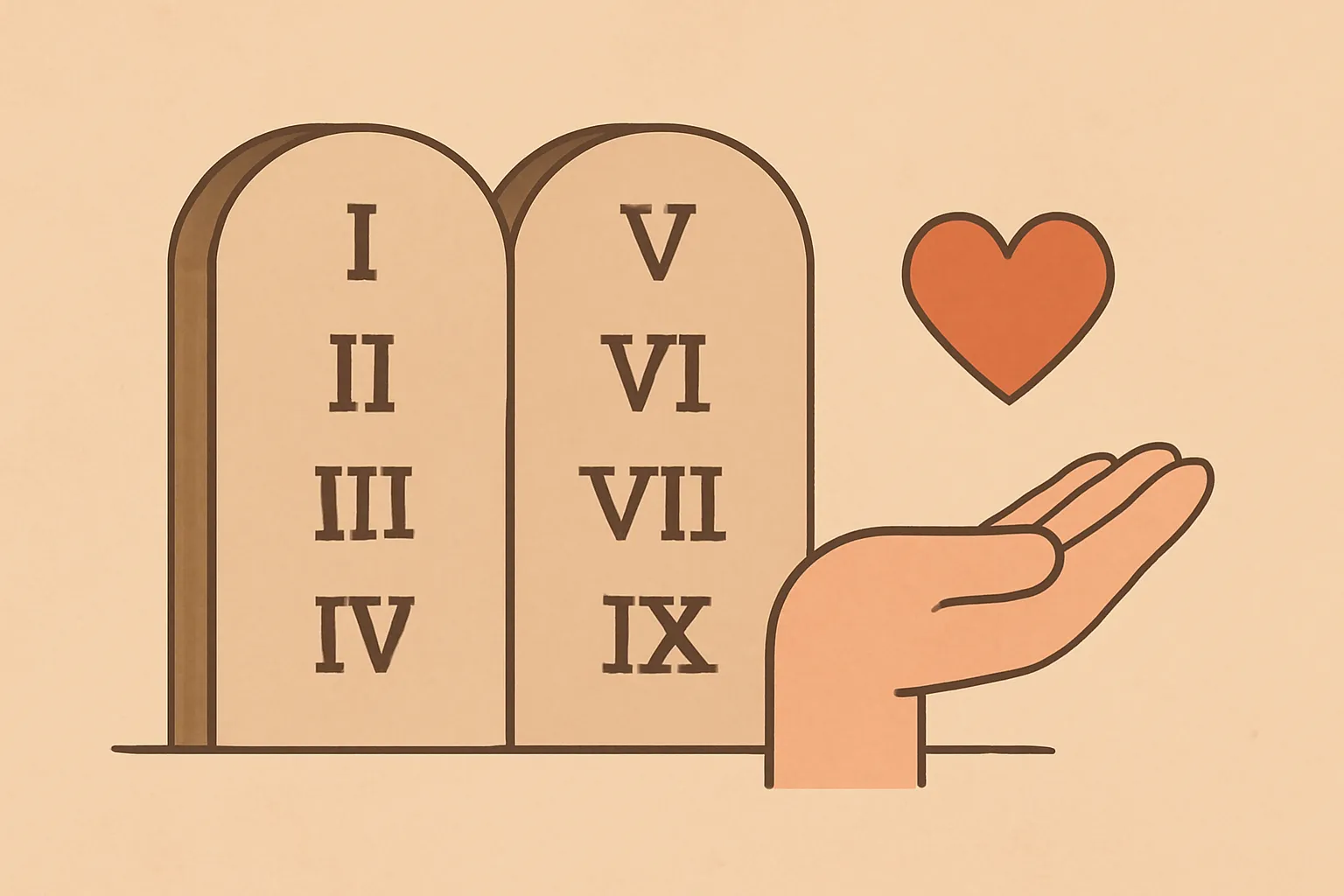
Throughout history, the Ten Commandments have stood as a foundational set of ethical and religious principles
that shape the moral imagination of communities across Judaism, Christianity, and, in some discussions, broader cultural discourse.
Also known as the Decalogue (literally, “ten words”) or, in Hebrew, Aseret ha-Dibrot, these guidelines are
more than a list of prohibitions. They function as a compact framework for approaching God, community, truth-telling, and
daily conduct. Across centuries and cultures, interpreters have explored what each commandment means in its original ancient
setting and how it can be applied in contemporary life.
In this guide, you will find a thorough exploration of each commandment, with attention to meaning, historical context,
and modern relevance. To provide breadth, the discussion uses several names for the same core ideas— the Ten Commandments, the Decalogue, and the Ten Words—to emphasize their enduring
significance across different traditions. Each commandment is presented with a concise summary, followed by deeper sections on
interpretation, practical implications, and common questions or misunderstandings.
As you read, you will encounter variations in how different religious communities order or label the commandments.
Some traditions treat two related prohibitions as a single commandment, while others separate details into subpoints. The aim here
is to present a clear, reader-friendly outline that honors the core intent of the commandments while offering avenues for thoughtful
reflection and responsible practice in today’s world.
1. The First Commandment: You shall have no other gods before Me
Meaning
The opening commandment establishes the primacy of the divine relationship from the outset. Monotheism is framed not
merely as belief but as allegiance—an orientation of life around the singular, transcendent God. The phrase “before Me” signals
loyalty, priority, and exclusive devotion, shaping ethics, worship, and identity.
Historical Context
In its ancient Near Eastern milieu, where polytheism was common, this commandment set Israel apart by declaring that no other
deity should eclipse the God of Israel. It addressed rival gods, national cults, and the temptation to blend faith with political
power. The commandment thus works at the intersection of faith and social life, marking what counts as ultimate authority.
Modern Relevance
Today, readers often interpret this commandment in broad terms: loyalty to a core set of values, energetic commitment to
one’s conscience or spiritual practice, and a critique of idolatry in secular forms (for example, placing wealth, status, or technology
above ethical considerations). Some readers extend the idea to a refusal to allow competing loyalties—economic pressures, political idols,
or cultural pressures—that would displace a central, compassionate, and just orientation to life.
Practical Applications
Priority-setting: Clarify what earns preeminent value in daily decisions (work, family, faith, service).
Ritual integrity: Ensure that worship or spiritual practice remains genuine rather than a veneer for social status.
Is it possible to honor many beliefs without breaking the first commandment? Some traditions emphasize freedom of faith rather than coercion of belief.
How does this commandment relate to moral commitments beyond explicit worship, such as justice or mercy?
2. The Second Commandment: You shall not make for yourself a carved image
Meaning
The prohibition on carved images addresses how a transcendent deity is represented and approached. The idea is to
avoid reducing the divine to an object that one can control, possess, or manipulate for personal advantage. The commandment
emphasizes reverence, humility, and the danger of idolatry—an idol can be anything that displaces the proper object of worship.
In the ancient world, visual representations of gods surfaced as focal points of ritual, power, and civic life. The
commandment challenged such practices by insisting that authentic worship cannot be bought, sold, or reduced to a thing.
It often targeted pagan cults that used statues in temple worship, while also challenging the instinct to instrumentalize faith
for political ends.
Modern Relevance
Contemporary readings broaden the idea to include emblems or technologies that might function as modern idols.
Some readers interpret this as a caution against allowing consumer culture, media, or ideologies to become ultimate sources of meaning.
Practical Applications
Discriminate between symbolic representations that inspire reverence and those that function as control mechanisms or status markers.
Mindful consumption: Evaluate whether objects or images distort ethical priorities or human relationships.
Iconoclasm with care: The commandment doesn’t prohibit all art or representation; it warns against reducing mystery to material form alone.
Common Questions
How should communities handle sacred symbols in public spaces?
Can artistic representations ever be a bridge to the divine, rather than a trap of idolatry?
3. The Third Commandment: You shall not take the name of the Lord your God in vain
Meaning
This commandment links reverence for the sacred name with responsible speech. It calls for integrity, honesty, and respect
in how God’s name (and what it represents) is spoken, invoked, or invoked publicly. It challenges flippancy, blasphemy,
manipulation, and careless rhetoric that diminishes sacred language.
Historical Context
In several ancient cultures, the name of a deity carried magical or protective power. The commandment cautions against
trivializing the divine name or using it to coerce or intimidate others. It also guarded against profane uses, such as
oath-taking without the seriousness to fulfill promises.
Modern Relevance
In contemporary life, this is often read as a call for truthful speech, ethical promises, and avoidance of empty oaths.
It also invites reflection on how language can either heal or harm communities—especially in public discourse, social media,
and political rhetoric.
Practical Applications
Honesty in communication: Speak carefully about beliefs, commitments, and responsibilities.
Respect for sacred language: Acknowledge the weight of words used in worship, prayer, and study.
Oath-keeping: Follow through on assurances and commitments, avoiding casual or deceitful declarations.
Common Questions
What counts as “in vain” speech in a secular context?
How do different faith traditions handle the use of sacred names in art and literature?
4. The Fourth Commandment: Remember the Sabbath day, to keep it holy
Meaning
The Sabbath commandment centers on rest, rhythm, and sanctification of time. It invites individuals and communities to set aside
ordinary labor and distraction in order to focus on rest, worship, gratitude, and relationships. It is not merely about abstaining
from work but about constructing a pattern that sustains life and community.
Historical Context
In the ancient calendar, the Sabbath marked a weekly break from the routines of agriculture, trade, and public life. It signified
trust in divine provision and the belief that creation, including human labor, has a purposeful cadence. The practice also shaped
community life—families, markets, and religious gatherings coalesced around a shared day of rest.
Modern Relevance
In today’s fast-paced societies, the Sabbath idea translates into conversations about work-life balance, mental health, and the
ethics of labor. It also prompts questions about the appropriate cadence of rest, the role of worship, and how to structure time
so that it fosters relationships, learning, and renewal.
Practical Applications
Ritual and leisure: Create a regular day or time for rest, family, study, and worship, free from unnecessary work.
Boundaries: Establish boundaries to protect time from constant hustle and digital distraction.
Reflection: Use this time for gratitude, contemplation, and community service.
How can people observe a Sabbath in secular work environments?
Is one day of rest sufficient, or should rest be integrated throughout the week?
5. The Fifth Commandment: Honor your father and your mother
Meaning
This commandment emphasizes familial respect, care, and responsibility across generations. It is about acknowledging
the role of parents, elders, and those who shape family and community life. It also mirrors broader social values—honor,
care for aging members, and intergenerational trust.
Historical Context
In ancient societies, family ties carried legal and social weight. The commandment reinforced duties to parents and elders
as a foundation for stable households and communal continuity. It sometimes included promises of well-being and longevity for
those who honor their parents.
Modern Relevance
Modern readings highlight respect and responsibility toward parents while recognizing changing family structures. It can
include care for aging relatives, honoring parental authority in appropriate contexts, and showing gratitude for upbringing and
education.
Practical Applications
Caregiving: Provide support for aging parents or guardians when needed.
Grateful engagement: Express appreciation for parents’ sacrifices, while maintaining healthy boundaries.
Intergenerational solidarity: Foster dialogue and mutual respect across generations within communities.
Common Questions
Does honoring parents require unconditional obedience in every situation?
How should families interpret this commandment in modern blended or chosen families?
6. The Sixth Commandment: You shall not murder
Meaning
This prohibition centers on the sanctity of life. It forbids taking another person’s life and implies respect for the dignity
and safety of every human being. The commandment also invites reflection on the conditions that can threaten life, such as
violence, neglect, and social harm, pushing toward ethical behavior that protects well-being.
Historical Context
In ancient societies, laws about homicide varied, and public justice often governed disputes over life and kinship. The commandment
provided a universal baseline for community safety and ethical governance, shaping legal and moral debates across civilizations.
Modern Relevance
Today, discussions expand this commandment into a broad ethic of nonviolence, peacemaking, and the protection of vulnerable
members of society. It invites questions about self-defense, capital punishment, war, abortion, euthanasia, and the
quality of life in a pluralistic world.
Practical Applications
Conflict resolution: Seek nonviolent ways to resolve disputes and reduce harm.
Protection of life: Support policies and practices that safeguard health, safety, and dignity for all.
Nonviolence: Cultivate habits of mercy, forgiveness, and restorative justice.
Common Questions
How do different traditions approach complex issues like self-defense and life-ending choices?
Can mercy and justice be reconciled with punishment in certain circumstances?
7. The Seventh Commandment: You shall not commit adultery
Meaning
This commandment addresses the integrity of intimate relationships and the trust that sustains families and communities.
It emphasizes fidelity, honesty, and responsibility in romantic and sexual life, while acknowledging the social and emotional
stakes involved in relationships.
Historical Context
In many ancient codes, adultery carried severe social penalties because it could threaten lineage, inheritance, and family
honor. The commandment articulates a standard of conduct that reinforces familial stability and communal trust.
Modern Relevance
Contemporary discussions often explore issues of consent, autonomy, and healthy relationships alongside fidelity. The commandment
is read as promoting mutual respect, transparent communication, and responsibility in intimate life, while recognizing the
diversity of relationship structures in modern society.
Practical Applications
Trust and commitment: Build relationships that emphasize honesty, consent, and mutual care.
Ethical boundaries: Establish and respect boundaries that protect all involved parties.
Communication: Prioritize open discussion about expectations, needs, and accountability.
Common Questions
How do various communities balance fidelity with modern relationships and non-traditional family structures?
What is the role of forgiveness and reconciliation after infidelity?
8. The Eighth Commandment: You shall not steal
Meaning
This prohibition protects property, rights, and trust within a community. It rejects taking what belongs to another
person without permission, and it extends to broader concerns about fairness, labor, and the dignity of work.
In ancient economies, the line between private property and communal resources could be porous. The commandment clarifies
that individuals owe honest labor and fair exchange, and that the possession of goods should align with consent and law.
Modern Relevance
The ethics of theft expand in our era to include issues like intellectual property, corruption, fraud, and the misuse of
others’ labor. It invites reflection on economic justice, social safety nets, and the moral implications of borrowing
without permission.
Practical Applications
Fair dealing: Seek consent and proper authorization for use or transfer of goods or ideas.
Respect for work: Value others’ labor and compensate honestly.
Justice-oriented living: Support systems that reduce poverty and promote equitable access to resources.
Common Questions
How should communities respond to petty theft versus systemic injustice?
What constitutes “taking by deception” in modern contexts like digital data or software?
9. The Ninth Commandment: You shall not bear false witness against your neighbor
Meaning
This commandment centers on truthfulness, fairness, and the protection of people’s reputations. It warns against lying,
misrepresentation, and spreading unfounded rumors that can harm individuals or communities. Truth-telling is linked to
justice and trust.
Historical Context
In legal and civic settings of the ancient world, accurate testimony was essential to the administration of justice.
False testimony could lead to unjust punishment or harm. The commandment safeguards the integrity of courts, families,
and public life.
Modern Relevance
In today’s information-rich environment, the commandment invites critical media literacy, careful documentation, and ethical
discernment about sources. It also relates to online behavior and the duty to avoid spreading misinformation that can harm
others.
Practical Applications
Honest communication: Speak truthfully, verify information, and avoid exaggeration or manipulation.
Respect for reputation: Consider the impact of words on others and refrain from unfounded accusations.
Accountability: Be willing to correct mistakes and acknowledge errors when they occur.
Common Questions
How do we balance principled truth-telling with compassion or protection of privacy?
What is the line between opinion and fact, especially in public discourse?
10. The Tenth Commandment: You shall not covet
Meaning
The final commandment guards against envy and discontent. It calls for interior integrity—control over inner desires and
motivations that lead to destructive external actions. Coveting can fuel resentment, comparison, and social harm, even if
outward behavior remains lawful.
Historical Context
In agrarian and communal life, envy could destabilize families and markets. The prohibition on coveting their neighbor’s
possessions—house, spouse, or status—aimed to maintain harmony, discourage exploitation, and promote trust among neighbors.
Modern Relevance
In our consumer-driven world, this instruction encourages mindfulness about wants, social pressures, and the ethical
consequences of desire. It invites people to pursue contentment, generosity, and sustainable living rather than endless
accumulation.
Practical Applications
Contentment: Practice gratitude and discern the difference between legitimate needs and unnecessary craving.
Generosity: Channel resources toward others and communal well-being rather than competing for possession.
Ethical consumption: Make choices that avoid harm to others and the environment in pursuit of material gain.
Common Questions
How does coveting relate to broader issues of social comparison in the digital age?
Can ambition be compatible with the commandment against coveting, if pursued ethically?
Toward a Living Ethics of the Ten Commandments
The Ten Commandments are not merely a historical artifact or a list of prohibitions. They function as a living
ethical framework that invites ongoing interpretation, dialogue, and practice. By studying the meanings behind each
commandment—whether as a directive about the relationship with God, the proper uses of speech and time, or the conduct
within families and communities—we can explore how ancient wisdom speaks to modern life.
Readers may notice that each commandment carries a practical dimension: a principle that can guide decisions,
a lesson about how to relate to others, and a call to responsibility in daily living. When
discussed with openness and respect for diverse perspectives, the Ten Commandments become a shared resource for moral
reflection, cultural literacy, and interfaith dialogue.
If you would like, this guide can be expanded with case studies, historical footnotes, or cross-tradition comparisons to
illuminate how different communities engage with the Decalogue. The central aim remains: to understand the core ideas, the
reasons people have found them compelling for millennia, and the ways in which their meanings continue to evolve in new contexts.