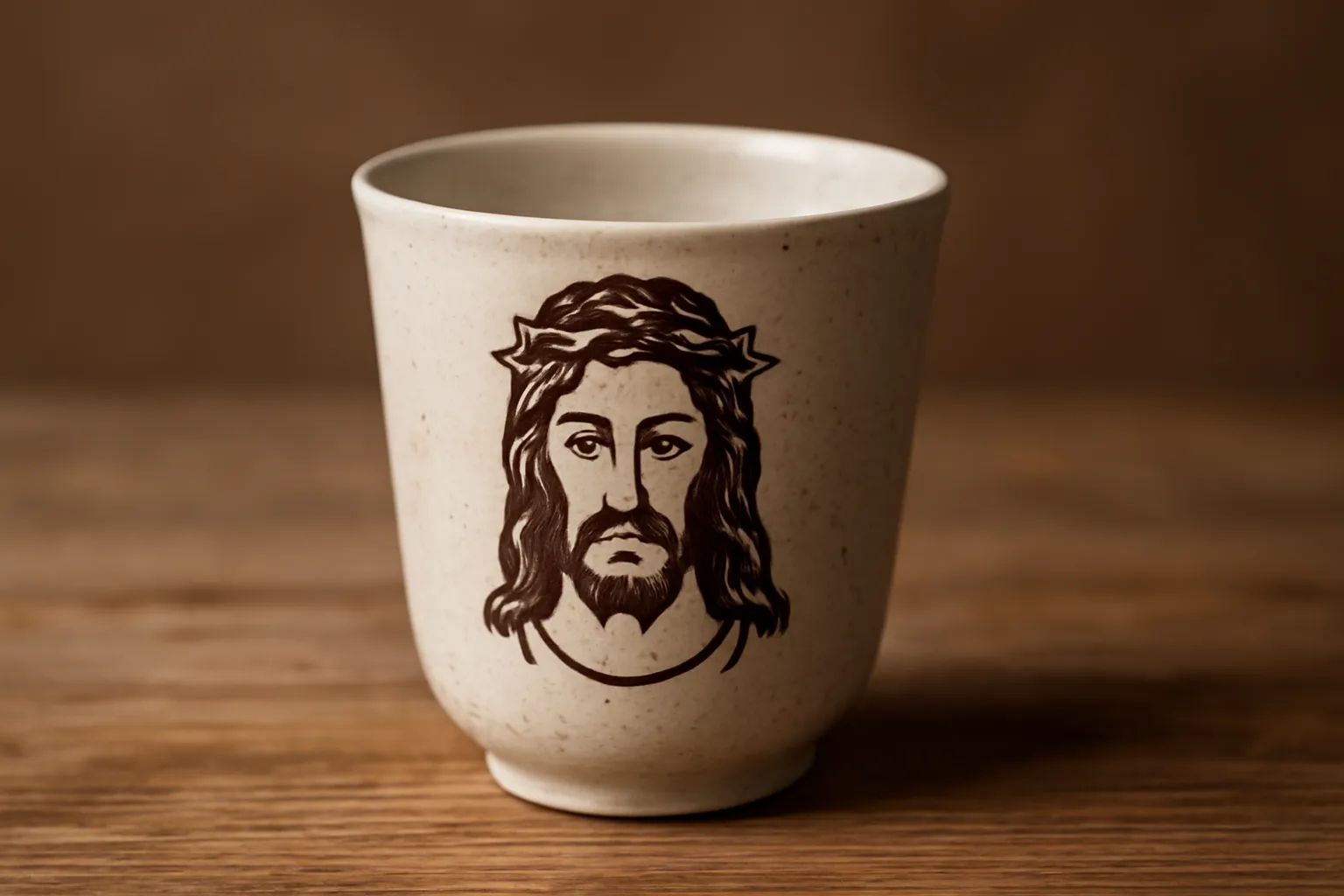
Meaning, Terminology, and the Core Idea of the Jesus Cup
The phrase Jesus Cup can be used in several overlapping ways, all centered on a sacred vessel associated with Jesus of Nazareth. At its most immediate level, it refers to the cup or chalice that is described in
the Gospel accounts as the container for wine shared by Jesus with his disciples during the Last Supper.
In Christian liturgical language, this vessel is often called a chalice, and it is emblematic of the Eucharist
or Holy Communion—the ritual meal in which bread represents Jesus’ body and wine represents his blood.
Beyond the literal vessel, the cup of Christ or cup of salvation has long stood as a richly layered symbol.
In biblical poetry and prophetic literature, a cup can signify covenantal blessing, intimate fellowship with God, or the
difficult experiences of suffering and sacrifice that are, within a Christian reading, subsumed into Jesus’ mission.
This article traces the meaning of this cup from its biblical roots through its medieval reception as a legendary relic, and into its
ongoing cultural significance. It surveys how the idea of Jesus’ cup—understood as a physical object, a theological symbol, and a
literary device—functions across different Christian traditions and in secular imagination.
Terms and Variants
Cup of Christ — a broad phrase used in discussions of Jesus’ life, the Last Supper, and salvation.
Jesus’ chalice — emphasizes the vessel’s form and its liturgical role in many churches.
The Last Supper cup — foregrounds the event at which the cup is first described in the Gospel narratives.
Holy Grail — a later medieval concept that, while not identical to the biblical cup, grew from its aura of sacred healing and quest.
Eucharistic cup or chalice — the technical term used in Roman Catholic, Orthodox, and many Protestant liturgies.
While these labels share common ground, they differ in emphasis: some focus on the object as a liturgical instrument, others on the symbol of
covenant, and still others on the mythic or legendary dimensions that arose in later centuries.
Historical Foundations: Biblical References and Early Interpretations
The Last Supper, recounted in the canonical Gospels of Matthew, Mark, Luke, and in Paul’s testimony in 1 Corinthians, is the oldest
anchor for any discussion of the Jesus Cup. In these accounts, Jesus takes a cup of wine, offers thanks, and says that the cup represents
his blood of the covenant poured out for many for the forgiveness of sins. This ritual act is tied to the coming
crucifixion and to the institution of a new form of fellowship among Jesus’ followers.
A few precise, widely cited points about the cup in early Christian writings include:
Jesus’ words at the Last Supper—in several Gospel accounts, he instructs his disciples to share the cup in remembrance of him.
This makes the cup a sign of fellowship, obedience, and anticipation of the sacrifice he is about to endure.
Pauline emphasis — in 1 Corinthians 11:23–26, Paul recites an early, apostolic memory of the Last Supper, stressing
that the cup, along with the bread, signifies the new covenant and the proclamation of Jesus’ death until he comes again.
Terminology in scripture — the metaphor of a cup often appears in Psalms and prophetic books to express
covenantal relationship, blessings, or experiences of suffering; in Christian interpretation, these images and motifs are read through the lens
of Jesus’ mission.
In historical theology, the vessel is not only a liturgical implement but a symbol that carries the weight of community identity:
who is included at the table, how the sacrament is administered, and what it means to remember Jesus’ life, death, and resurrection.
Communion as participation — believers are said to participate in the body and blood of Christ through the ritual cup and bread.
New covenant — the cup is a sign of the new covenant between God and humanity, ratified through Jesus’ sacrifice.
Universal invitation — the Eucharistic cup invites all believers to draw near, transcending social and ethnic boundaries (in many traditions, however, there are historical limitations and debates about inclusion).
Across centuries, theologians have wrestled with the balance between the cup’s literal meaning as a sacrament and its symbolic depth—its
capacity to evoke gratitude, repentance, hope, and the promise of eternal life.
The Cup and the Medieval Imagination: From the Last Supper to the Holy Grail
In the Middle Ages, the figure of the Jesus Cup acquired new layers of meaning as monasteries, poets, and secular writers
expanded the narrative beyond the biblical text. The vessel that once functioned strictly within the bounds of ritual memory now resounded with
legends of chivalric quests, healing power, and mysterious relics.
From Sacred Vessel to Legendary Relic
Holy Grail emergence — visionary stories and romance literature recast the sacred cup as an object of quest and restoration, often tied to
Arthurian fiction. The Grail became a symbol of perfect purity, spiritual truth, and the arduous journey toward union with the divine.
Relic culture — medieval Europe cherished objects believed to have miraculous properties. Some claimed to possess the actual cup used at the Last Supper,
while others spoke of a cup with healing powers or a cup that granted long life or spiritual insight.
Regional legends — various courts and churches claimed local cups as the Grail or as connected to the events of Holy Week, which helped to
bolster prestige and pilgrimage.
Notable Thematic Shifts
Healing and renewal — the Grail narrative often emphasizes restoration of health, community harmony, and moral integrity.
Ethical testing — seekers must prove humility, compassion, and chastened desire for glory; the journey itself becomes a pedagogy for spiritual formation.
Symbolic economy — the Grail functions as a measure of a knight’s character, as much as a literal object with curative properties.
The medieval fascination with the Holy Grail is a clear example of how a sacred cup can migrate from a straightforward liturgical
symbol to a multi-layered cultural icon. It reveals how communities shape religious artifacts to answer questions about virtue, leadership, and
the meaning of community itself.
Debates, Theologies, and the Question of a Physical Object
The question of whether there ever existed a single physical object that could be identified as Jesus’ Cup is a matter of
scholarly debate and popular legend. The canonical texts describe a ritual action and a sign, but they do not provide a precise inventory of
the vessel’s appearance, material, or custody. Consequently, Christians have historically focused on the theological meaning of the cup rather
than on the container’s physical details.
Key Debates and Points of View
Literal artifact — some traditions and secular legends claim that a particular cup exists, preserved in a church, abbey, or museum.
Advocates often tie the relic to miracles, pilgrim reports, or contested histories. Critics note the lack of verifiable provenance at many sites.
Sacramental symbol — in most Christian theology, the chalice is best understood as a symbol that communicates grace, not primarily as a physical
artifact to be worshiped or worshipped for its own sake.
Literary and cultural artifact — regardless of the existence of a real cup, the idea of Jesus’ Cup functions powerfully as a narrative device that
helps people explore faith, sacrifice, and human longing for transcendence.
Across denominations, the emphasis tends to fall on the spiritual significance of the cup and its contents rather than on the cup’s
material history. In Catholic and Orthodox traditions, the focus is on the sanctification of the wine and its role in communion; in many Protestant
communities, the emphasis might shift toward remembrance, proclamation, and ethical life in light of Christ’s sacrifice.
Conflating the Cup with the Grail: A Cautionary Distinction
The Holy Grail is a medieval literary construct that often assimilates the Last Supper cup into a quest for spiritual perfection. It is not a
canonical Christian doctrine but a narrative technology that elicits reflection on virtue, humility, and the longing for divine encounter.
In popular culture, the Grail frequently blends with adventure storytelling and Indiana Jones–style mythmaking. This fusion can blur the line between
biblical memory and myth, but it also demonstrates how enduring images of the cup continue to fascinate audiences worldwide.
Theology in Practice: The Eucharist, the Chalice, and Liturgical Meaning
The concept of the cup has a central place in Christian worship through the Eucharist. The chalice is the vessel that holds the wine
or grape juice used in Holy Communion, and its use is deeply shaped by doctrinal beliefs about the body and blood of Christ.
Liturgical Roles and Variations
Roman Catholic — the chalice is consecrated and used in the sacrament of the Eucharist; only ordained ministers may touch the sacred vessel
in many circumstances, and the wine is believed to become the blood of Christ during the rite.
Eastern Orthodox — the Eucharistic cup remains a focal point of liturgical theology, with ornate chalices and a strong emphasis on
mystery and sacramental presence.
Anglican and Protestant — practices vary, with some traditions celebrating the cup alongside bread in the form of means of grace, and
others interpreting the rite symbolically or as a memorial meal.
Across these traditions, the cup is less a curiosity and more a vehicle for divine grace, communal identity, and ethical
living. The ritual act—sharing the cup—becomes a physical expression of faith in a risen Christ, a renewed covenant, and the hope of eternal life.
The Symbolic Layers
Remembrance — recalling the sacrifice of Jesus and his command to remember him whenever the ritual occurs.
Communion — a visible sign of unity among believers, crossing barriers of time, culture, and background.
Gratitude and repentance — the ritual invites self-examination and gratitude for the gift of grace.
Artistic and Literary Reflections: The Cup as Image and Metaphor
The image of the Jesus Cup resonates through painting, sculpture, poetry, drama, and modern cinema. As a symbol, it carries mixed associations—purity and healing on one hand,
danger and power on the other—depending on how artists and writers choose to depict it.
Visual Arts and Iconography
Depictions of the Last Supper frequently include a chalice or cup as a central element, emphasizing fellowship and betrayal themes.
Christ on the cross, the risen Christ, or the Virgin Mary with a chalice can appear in iconography that alludes to the salvific role of the cup.
Literary Uses
In poetry, the cup is a metaphor for mortal vulnerability and divine grace, a thing to be received with humility.
In epic and romance narratives, the Grail quest reframes the cup as a test of character, patience, and the capacity to endure hardship for a greater good.
In modern film and fiction, the cup continues to symbolize courage under trial, the tension between sacred tradition and secular curiosity, and the
hope that sacred memory can translate into meaningful action in the present.
Global Cultural Significance: How Different Traditions Engage with the Concept
Across continents, communities have interpreted the concept of the Jesus Cup in ways that reflect local religious life, history, and
public imagination. The vessel becomes a focal point for discussions about ritual purity, access to sacred space, and the ethics of reverence.
In Catholic and Orthodox Worlds
The chalice is treated with reverence as a primary liturgical instrument connected to the real presence of Christ in the Eucharist.
Veneration often centers on the sacred mysteries that the cup represents—covenant, sacrifice, and communal life within the Church.
There is typically greater emphasis on remembrance, proclamation, and symbol rather than on the physical vessel itself.
Some communities celebrate the cup as a shared meal that unites believers in mission and ethical living, while others adopt more symbolic forms of the rite.
In Non-Western Contexts
Artists and theologians outside Europe have engaged with the cup through local storytelling, blending biblical memory with regional symbols of hospitality, healing, and justice.
Public discourses about the cup often intersect with debates about religious freedom, interfaith respect, and the role of sacred objects in public life.
The idea of a sacred cup also travels into secular arenas where it becomes a powerful metaphor for truth-seeking, moral integrity, and the
human longing for communion with something larger than oneself.
Contemporary Perspectives: Education, Significance, and Public Understanding
In modern education and media, the Jesus Cup appears in discussions about biblical literacy, religious symbolism, and the way sacred objects
shape cultural memory. Teachers, curators, writers, and filmmakers often use the image of the cup to illustrate how religious tradition communicates
meaning across generations.
Educational Approaches
Studying the Last Supper and the Eucharist helps students understand both historical contexts and present-day beliefs about communion.
Comparative religion courses may examine how other faiths use symbolic vessels to express covenant, hospitality, or ritual purification.
Popular Culture and Public Imagination
Legends of the Holy Grail shape minds about quests for truth, spiritual healing, and the moral tests that accompany great leadership.
Film and literature often use the cup as a dramatic device to explore the tension between sacred memory and human ambition.
These contemporary conversations show that the Jesus Cup remains a dynamic symbol—capable of carrying theological depth while also inviting
curiosity about history, art, and the human search for meaning.
Frequently Asked Questions: Clarifications About the Jesus Cup
The canonical texts describe a ritual object but do not identify a single unique physical cup that can be verified historically. The question
of whether a real, authenticated cup existed is an area of legend and debate. In most scholarly and ecclesial contexts, the theological meaning
of the cup takes precedence over the material artifact.
What does the cup symbolize in Christian teaching?
In Christian teaching, the cup symbolizes fellowship, sacrifice, and the new covenant established by
Jesus. It also points toward the expectation of Christ’s return and the ongoing life of the Church through the Eucharist.
How is the cup relevant to non-Christian audiences?
For non-Christian readers, the cup can be a potent symbol of hospitality, unity, and the human search for healing and meaning. It serves as a bridge
to discussions about ritual life in diverse cultures and about how communities remember pivotal historical moments.
The Jesus Cup occupies a distinctive place in religious imagination and cultural memory. It begins as a practical object used in a
pivotal moment of Jesus’ ministry and evolves into a symbol with multifaceted significance: a sign of covenant, a sign of communal life,
a source of healing and hope, and a prompt for ethical reflection. Across centuries and continents, the vessel—whether treated as a liturgical tool,
a legendary relic, or a metaphor for quest and grace—continues to invite contemplation about what true nourishment means for individuals and
communities alike.
By tracing the journey of the Cup of Christ from scriptural scenes to medieval romance, and into contemporary culture, we gain not
only historical knowledge but also a richer understanding of how sacred objects function as living signs. They remind us that faith is not only a doctrine
to be believed but a trajectory of practice, memory, and shared human longing—an invitation to gather around a symbolic cup and, in doing so, to
enter into deeper fellowship with one another.