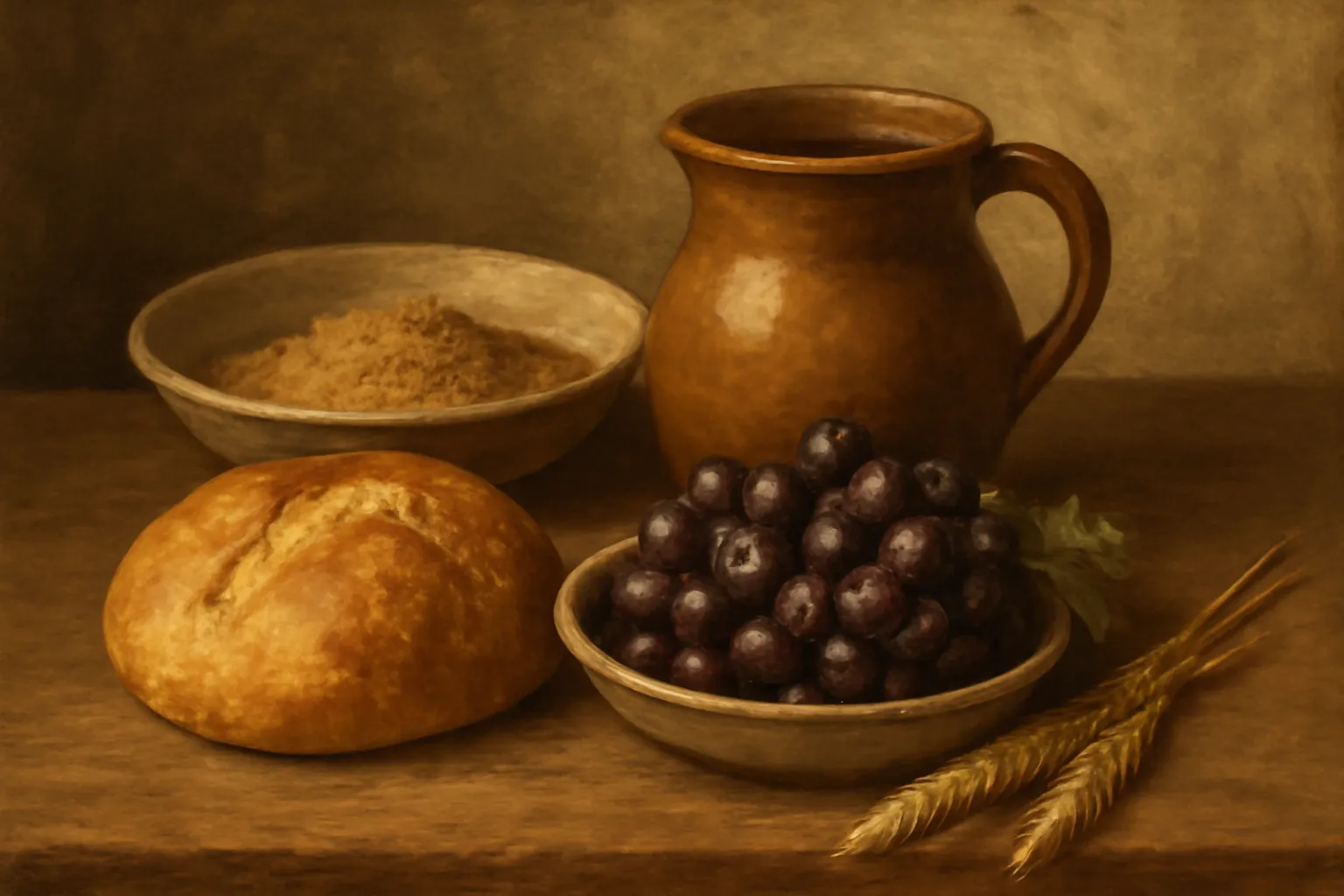
Introduction to the Bible and the Diet of the Ancient Near East
The food of the Bible is not only a catalog of what people ate in antiquity; it is also a window into
culture, economy, religion, and daily life. In the biblical world, meals carried social status, ritual
meaning, and theological symbolism. The landscape of the land—fields, orchards, vineyards, flocks, and
seas—shaped what could be grown, hunted, fished, or kept. In this guide, we explore biblical foods across categories
such as grains, fruits, vegetables, dairy, meat, and beverages, and we highlight how these foods
function in stories, laws, and prayers. We also consider the difference between clean and unclean foods, as
described in Leviticus and Deuteronomy, and how later religious communities interpreted these terms.
Grains and Bread: The Everyday Staple and Sacred Symbol
The grain landscape: wheat, barley, and beyond
In the biblical world, grain is the foundation of sustenance. The most prominent grains were wheat and barley, cultivated in fields and measured in shekels and ephahs. Wheat
bread was associated with refinement and plenty, while barley bread was common among poorer households and in rural settings.
Wheat represents fertility and refined nourishment, often used for ceremonial bread and offerings.
Barley is the hardy staple of the working poor, used to bake simple loaves and to feed animals.
Other grains mentioned in the Bible include emmer and spelt, ancient relatives of modern wheat that appear in archaeological and textual sources.
Unleavened bread, leaven, and Passover
A central motif in biblical food is unleavened bread, especially during the Passover festival. The
command to eat unleavened bread for seven days (Exodus 12) highlights haste and escape from bondage. Leaven
or yeast functions as a symbol in many biblical texts, contrasting purity and time-honored ritual
observances with the rapid movement of narrative salvation.
In addition to unleavened bread, the Bible references bread offerings and ritual meals that accompany
sacred covenants. The act of sharing bread is a sign of hospitality, covenantal alliance, and the presence of the
divine. Bread thus occupies a dual position: it is a daily sustenance and a powerful symbol in worship and
community life.
Fruits of the Land: The Orchard and the Vineyard
The land of Canaan and surrounding regions produced a rich array of fruits that appear frequently in biblical
narratives. These fruits were not only nourishment but also emblematic signs of blessing and harvest seasons.
Figs and grapes feature prominently in poetry and prophecy, often symbolizing sweetness, abundance, and the fruits of labor.
Pomegranates appear on architecture and priestly garments, serving as a visual reminder of fertility and law.
Dates and olive oil are staples in the agrarian economy, providing energy, fat, and a premium for trade.
Grapes are central to wine production, which in turn becomes a key liturgical and celebratory element.
The olive tree stands out as a symbol of endurance and blessing. Olive oil was used for cooking, lighting, anointing, and
offerings. It appears in lullabies and laments as well as in ritual contexts, illustrating how a single product can
traverse practical and spiritual domains.
Vegetables and Legumes: The Garden of Everyday Nutrition
The diverse assortment of vegetables and legumes provided essential nutrients and
variety to the biblical table. From fresh produce to dried staples, these foods kept households fed through changing seasons.
Lentils and beans (including chickpeas) appear in agricultural lists and meal preparations, offering protein
and texture in stews and pottages.
Onions, garlic, and cucumbers show up in hospitality scenes and poetic imagery, signaling abundance and health.
Herbs such as dill, mint, thyme, and coriander (coriander seeds) contributed flavor to stews, breads, and sauces.
Vegetables like lettuce and cabbage appear less often but signal everyday meals and market abundance in certain texts.
The biblical diet often balanced grains with vegetables, providing vitamins, fiber, and energy. The careful use of
herbs and aromatics demonstrates an awareness of flavor and nutrition that resonates with modern culinary
sensibilities.
Protein Sources: Meat, Fish, and the Animal Economy
Protein sources in the Bible come from both land and sea. The choices reflect the ecosystems of the ancient Near East as well as
ritual and ethical considerations embedded in the text.
Meat from land animals: clean and sacred boundaries
The dietary laws distinguish clean and unclean land animals. Animals that chew the cud and have
a divided hoof are considered clean and permissible with proper preparation. In practice, this includes animals such as
cows, sheep, goats, and deer, though rules about slaughter, blood, and fat additions also shape how meat could be consumed.
Common domesticated animals include sheep, goats, cattle, and camels in some contexts, with meat consumption connected to ritual offerings and feasts.
Ritual purity and cooking practices influenced how meat was prepared in households, temples, and communal meals.
Seafood: fish with fins and scales
In the biblical classification, fish with fins and scales are generally considered clean, while other aquatic
creatures are forbidden. This distinction shaped what could be eaten and what could not, particularly in
coastal and riverside communities.
Popular seafood choices in Israelite culture likely included various species of fish that could be caught along the Mediterranean coast and in lakes.
Specific lists in Leviticus and Deuteronomy help readers understand how communities navigated dietary boundaries, ritual purity, and meal planning.
Birds, fowl, and occasional insects
Birds were allowed or forbidden based on tradition and law. The biblical corpus sometimes notes permitted birds in the context of
offerings and feasts, though the lists are less uniform than for land animals or fish. There is also a notable mention of locusts and some other insects as permitted foods in certain passages, illustrating how edible creatures could be
identified within a broader ethical framework.
Dairy and Fermentation: Milk, Cheese, and the Emblem of Blessing
Dairy products appear in many biblical scenes, often signaling abundance, hospitality, and ritual offerings. Milk, butter, and
cheese are tied to wealth and sustenance, while fermentation plays a role in wine, bread, and dairy products alike.
Milk represents nourishment and fertility; it appears in blessings and in descriptions of livestock prosperity.
Cheese and other dairy foods show up in wedding feasts and household provisioning, reflecting pastoral life.
Fermented beverages like wine accompany feasts, sacrifices, and spiritual rituals, linking physical sustenance with communal worship.
The use of dairy and fermentation in biblical texts also carries symbolic weight. For example, milk is sometimes linked to
abundance and the soothing of hardship, while fermentation can symbolize transformation, growth, and the passage of time through
generations of households and communities.
Honey and the Sweet Side of the Landscape
Honey appears as a symbol of abundance and divine blessing in many psalms and prophetic writings. The phrase “land flowing with milk and honey”
paints a picture of a richly fruitful homeland and a favorable providence.
The biblical honey does not always refer to bees; it can also denote naturally sweet substances harvested from the land.
Sweetness is often paired with virtue in poetry—an image of blessing, goodness, and the sweetness of obedience to God.
In practical terms, honey functioned as a preservative, a sweetener for breads and cakes, and a luxury during festive meals.
Its presence in the biblical narrative reinforces the broader theme of divine generosity toward the people and their land.
Beverages: Water, Wine, and Sacred Libations
Beverages in the Bible include water as a basic necessity and wine as a culturally and theologically charged
substance. Wine is used in celebration, sacrifice, and imagery of blessing, while water often represents life, renewal, and the
saving action of God in desert journeys.
Water appears as a life-giving resource, essential for travelers and agricultural cycles; it also features in miracles and prophetic imagery.
Wine is a central ritual element in Passover, weddings, and temple offerings; it also becomes a metaphor for blessing and judgment in prophetic literature.
In some contexts, new wine vs old wine signals freshness, change, and the tension between old traditions and new expressions.
The biblical treatment of beverages emphasizes responsible enjoyment as part of communal life. Drunkenness is typically warned against,
while moderation and reverence for divine gifts are emphasized in ritual settings.
Manna and the Wilderness Diet: Food as Divine Provision
One of the most striking foods in the Bible is manna, the miraculous bread given to the Israelites during their
forty-year journey in the wilderness. Described as bread from heaven, manna appears as a daily sign of God’s care and presence.
Manna’s appearance and taste are described with imagery that blends nourishment with awe—thin wafers, sweet like honey.
Jesus later references manna in the Gospel of John, connecting ancient bread from heaven to a deeper spiritual sustenance.
The story of manna teaches about dependence, trust, and the rhythms of life in exile and pilgrimage. It also invites reflection on the
notion that daily bread is both a physical necessity and a spiritual gift.
Dietary Laws: Clean, Unclean, and the Ethics of Food
The biblical legal corpus includes a sophisticated framework about clean and unclean foods. This framework shapes dietary practice,
ritual purity, and communal identity. It is not only about health but about distinguishing the people as a set-apart community with a distinct
relationship to God.
Rules about land animals require chewing cud and having a cloven hoof; fish must have fins and scales; birds are restricted to those not listed as detestable.
Blood is explicitly forbidden, along with a prohibition against consuming fat; these rules shape cooking methods, meat preparation, and sacred meals.
In later Jewish and Christian interpretive traditions, these laws become lenses for broader spiritual and ethical discussions, including questions about
ritual purity, food festivals, and practical dietary choices in diaspora communities.
Readers today often approach these laws as historical and theological documents that illuminate how ancient communities organized
moral life around food. Contemporary readers may also draw parallels to modern debates about nutrition, animal welfare, and sustainable
farming, recognizing that the biblical text engages with questions of care, restraint, and gratitude for provision.
Food in Sacred Time: Sabbath, Festivals, and Feasts
Food is inseparable from time in the biblical corpus. The Sabbath, Passover, Feast of Weeks (Pentecost), and the Feast of Tabernacles
each center meals and ritual foods as acts of worship, memory, and community bonding.
Unleavened bread and roasted lamb at Passover recall the exodus and deliverance.
Feasts often feature grains, fruit, and wine, turning ordinary sustenance into a shared act of thanksgiving and covenant renewal.
Hospitality and guest meals in biblical narratives showcase the social meaning of food, where sharing bread and wine affirms friendship and kinship.
Across these times, food operates as a timemark and a spiritual act. The rituals remind communities of their identity, history, and
future hope—an integration of table, temple, and text.
Symbolism of Food in Biblical Narratives
Food in the Bible often carries symbolic meanings beyond sustenance. Bread, water, wine, and oil appear as metaphors for
life, blessing, judgment, and divine presence.
Bread of life (as echoed in the Gospel of John) links physical bread with spiritual nourishment and eternal life.
Living water imagery (water that becomes a source of life) points to divine sustenance that exceeds mere physical thirst.
Oil as an emblem of anointing, healing, and protection demonstrates how ordinary substances can carry sacred authority.
The symbolism surrounding food helps readers read biblical narrative with attention to how hunger, hospitality, ritual, and blessing intersect. It invites reflection on how everyday meals point toward larger theological realities.
Modern Reflections: How to Read Biblical Food Texts Today
For modern readers, biblical foods offer a bridge to history, culture, and spiritual practice. Approaching these texts with curiosity
and care can illuminate how people in ancient times understood abundance, scarcity, constraint, and generosity.
Context matters. Grain varieties, livestock practices, and agricultural calendars shape what is described and why.
Language matters. Terms for food, meals, and offerings carry layered meanings—food as hospitality, food as covenant, food as sign of blessing.
Ethical questions arise. Debates about animal welfare, sustainable farming, and food justice echo in ancient laws and prophetic admonitions.
Spiritual practice can echo biblical themes. Practices of gratitude, hospitality, and responsible stewardship can be informed by biblical food ethics.
While the Bible provides a window into ancient diets, it also offers timeless lessons about nourishment, community, and gratitude. The act of eating can be seen as a discipline—an act of saying yes to life, to neighbors, and to the divine gifts that sustain us.
Practical Guides for Readers: How to Explore Biblical Food Texts
If you want to explore biblical foods in more depth, consider a few practical approaches that balance historical understanding with personal reflection.
Identify the food category (grain, fruit, vegetable, meat, dairy, beverage) and note the cultural or ritual context.
Observe the legal or ceremonial frame (clean/unclean, offerings, feast days) to understand why a food matters in its text.
Note symbol and metaphor. Ask how a food item functions as a sign within a narrative or poem.
Make modern connections. Reflect on how the themes of provision, gratitude, and hospitality translate into today’s meals and food practices.
For readers who wish to go further, consult commentaries and encyclopedias that map the biblical lexicon of food,
as well as archaeological studies of ancient kitchens, markets, and farming methods. A careful blend of textual study and culinary curiosity can enrich both knowledge and taste.
Glossary of Key Terms in Biblical Food Studies
Clean vs. Unclean: Category system used in Leviticus and Deuteronomy to designate which animals and foods are permissible.
Manna: The miraculous bread-like sustenance given to the Israelites in the wilderness.
Leaven: Yeast or fermentation, symbolically associated with growth and sometimes with corruption or haste, depending on context.
Unleavened bread: Bread made without yeast, associated with Passover and rapid exodus.
Bread of the Presence or showbread: The bread placed on the table in the tabernacle/temple as part of ritual offerings.
Olive oil: A multipurpose substance used for cooking, lighting lamps, anointing, and offerings.
Wine: A beverage with ritual and symbolic uses in feasts, sacrifices, and prayers.
Some Notable Biblical Foods in Narrative Fragments
Here are a few notable foods and the contexts in which they appear, to give a sense of texture to biblical cuisine.
Fig bread and fig cakes feature in stories of hospitality and feast days.
Lentil soup or stews appear in family meals, famine narratives, and prophetic scenes where scarcity meets faith.
Raisin cakes and grape offerings connect harvest time to temple ritual and celebration.
Fish and loaves become emblematic in miracle narratives where Jesus multiplies food to feed crowds, highlighting divine provision through human agency.
Paschal lamb centers the Passover meal as a memory of salvation and a sign of covenant fidelity.
Historical and Cultural Context: What Influenced Biblical Foods?
The biblical foods reflect a history of agricultural development, trade, and religious life across the ancient Near East and the Mediterranean world.
Trade routes brought spices, grains, wine, and oil from diverse regions. Seasonal cycles dictated harvests, fasts, and feasts. The temple economy and
priestly duties also shaped what foods were prepared, offered, and consumed in ritual spaces.
Agriculture as the backbone of sustenance—plenty and famine both leave their imprint on the stories.
Trade and exchange—grain, wine, oil, and salt appear in economic records and temple offerings.
Ritual and law—foods become vehicles for covenant renewal, purity laws, and acts of hospitality.
What We Learn from Biblical Foods
The Bible presents food as more than nutrition. It is a conduit for community, identity, grace, and divine provision.
From the humble loaf of bread to the extravagant feast, meals in biblical literature model hospitality, gratitude, and reverence.
Whether you read these foods as historical data, symbolic language, or moral teaching, they invite reflection on how we approach food today:
how we share meals, how we care for the land, and how we recognize daily bread as a gift. The Bible’s food world encourages us to savor abundance
with humility, to practice hospitality with generosity, and to see nourishment as part of a larger story about God, people, and creation.