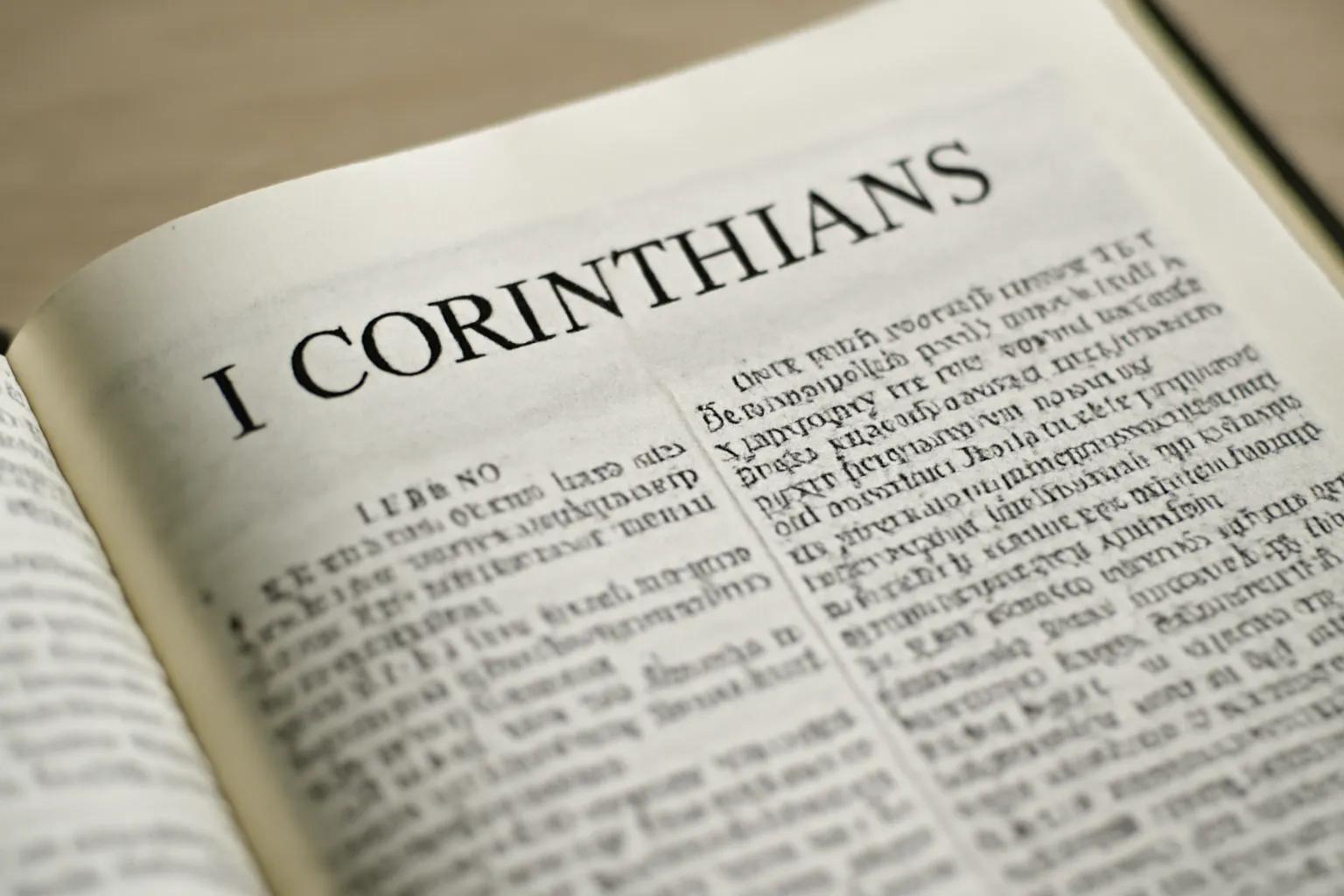
First Corinthians Commentary: A Comprehensive Verse-by-Verse Guide offers readers and students of the Bible a detailed, verse-by-verse exploration of the Pauline letter to the church in Corinth. This article presents an accessible, informative, and teachable approach to understanding the text, its historical context, and its ongoing relevance for churches and individuals today. The aim is not merely to summarize but to illuminate how Paul’s responses to real problems in a first-century Christian community can illuminate enduring questions about wisdom, faith, love, and community life.
Overview and Purpose of this First Corinthians Commentary
In any thorough study of First Corinthians, readers encounter a letter that is at once intensely practical and deeply theological. The apostle Paul writes to address a range of issues facing the church at Corinth, including divisions, disagreements about behavior, questions about worship, and reflections on the nature of the gospel. A well-constructed commentary on First Corinthians serves several purposes:
To provide historical context and explain how cultural factors influenced early Christian communities.
To offer exegetical notes on key terms, phrases, and rhetorical strategies used by Paul.
To explore theological themes such as the cross, wisdom, love, resurrection, and the nature of spiritual gifts.
To translate ancient concerns into contemporary applications for churches, families, and individuals seeking to live out the gospel in today’s world.
To present a verses-by-verses framework that guides readers through the letter in a logical, teachable sequence.
Context and Background for 1 Corinthians
Understanding this letter begins with grasping its historical and situational backdrop. The city of Corinth was a bustling, cosmopolitan hub in the first century, known for its wealth, eloquence, and moral challenges. The church there was imperfect, diverse, and often divided along lines of personality, preference, and social status. A First Corinthians commentary typically highlights several core factors that shaped Paul’s response:
The author and audience: Paul the apostle writes to a local church with members from various backgrounds, including Jewish and Gentile believers.
External pressures: The church faced philosophical debates about wisdom and power, as well as moral compromises common in the surrounding culture.
Internal concerns: Reports of division, lawsuits among believers, issues in worship, and questions about sexual ethics required pastoral leadership and spiritual guidance.
The aim of the letter: Paul seeks to ground the community in the gospel of Jesus Christ, recalibrate their priorities, and promote unity through love and service.
How to Use a First Corinthians Commentary
A good commentary on First Corinthians is not merely a reference book but a tool for study, teaching, preaching, and personal growth. Here are practical ways to engage with this kind of scholarly resource:
Start with the big picture by reading an outline of the letter’s major sections and themes.
Read the sections in order to observe how Paul develops his argument chapter by chapter.
Pay attention to key terms (for example, “wisdom,” “foolishness,” “gospel,” “spiritual gifts,” “love”).
Note the historical-cultural notes that explain how specific practices functioned in Corinth.
Use the verse-by-verse insights to prepare sermons, Bible studies, or personal devotionals.
Verse-by-Verse Guide: 1 Corinthians at a Glance
The following sections summarize major portions of the letter and highlight interpretive angles often discussed in a First Corinthians commentary. This guide is designed to be helpful for readers new to the text and for those seeking a deeper, more systematic understanding.
Ch. 1: Paul confronts divisions in the church and emphasizes that the message of the cross defeats worldly notions of triumph. The refrain is that Christ crucified is the power and wisdom of God, not human rhetoric.
Ch. 2: Paul contrasts human wisdom with the divine wisdom revealed by the Spirit. The emphasis on the Holy Spirit’s revealing power invites readers to cultivate spiritual discernment over mere eloquence.
Ch. 3: Paul uses agricultural imagery to remind the church that leaders are merely workers and that the ultimate purpose is to build on the foundation of Christ. He warns against boasting in human leaders and stresses that God gives the growth.
Ch. 4: The apostle reframes authority and status within the community. He invites believers to understand themselves as stewards of the mysteries of God and to imitate his own humble, servant-minded leadership.
Chapters 5–7: Moral Boundaries, Cases of Discipline, and The Shape of Family Life
Ch. 5: A serious call to deal with sexual immorality within the church, including a case of discipline that demonstrates the seriousness of holiness in the community.
Ch. 6: Debates about lawsuits among believers and questions about the sanctity of the body as a temple of the Holy Spirit.
Ch. 7: Guidance on marriage, singleness, and freedom in practice, balancing personal conscience with communal integrity.
Chapters 8–10: Food, Idolatry, and the Ethics of Liberty
Ch. 8–10: The debate over whether it is permissible to eat food sacrificed to idols. Paul’s approach emphasizes freedom in Christ paired with a responsible, considerate love that avoids stumbling others.
Chapters 11–14: Worship, Order, and the Use of Spiritual Gifts
Ch. 11: Addresses proper conduct in public worship, including issues of gender, authority, and the Lord’s Supper as a remembering of the body and the blood of Christ.
Ch. 12–14: Paul’s extensive treatment of spiritual gifts, the unity of the body, and the primacy of love as the guiding principle for exercising gifts in worship and community life.
Chapters 15–16: Resurrection, Gospel Boldness, and Final Exhortations
Ch. 15: Paul states the centrality of the resurrection of Christ and the future resurrection of believers. He defends the reality and implications of the bodily resurrection for faith and hope.
Ch. 16: Final instructions, financial collections for the church in Jerusalem, and personal greetings. Paul ends with meaningful exhortations about readiness and faithfulness.
Major Theological Themes in 1 Corinthians
A thoughtful First Corinthians commentary will highlight the enduring themes that run through the letter and connect them to both historical and contemporary concerns. Here are some of the most central ideas:
Unity in the body of Christ as the governing principle of church life, superseding factional loyalties.
Wisdom and the cross as the true measure of power and knowledge, countering the era’s emphasis on rhetorical prowess or social status.
Love as the path of maturity—the famous Love Chapter in 13—guiding the use of gifts and the conduct of the community.
Resurrection hope and its implications for ethics, preaching, and worldview.
Gifts and order within worship and ministry, balancing freedom with responsibility to others.
Holiness and purity in moral behavior, especially in sexual ethics and public worship.
Freedom and responsibility in areas of conscience, especially where cultural norms conflict with Christian witness.
Key Passages and Their Interpretive Focus
In a comprehensive First Corinthians verse-by-verse guide, certain verses are especially fruitful for study and teaching. Here are a few representative anchors, with the kind of interpretive questions a scholar might raise:
1:18–25 — How does the paradox of the cross become the wisdom that saves? What counts as true power in God’s economy?
3:16–17 — What does it mean that the church is God’s temple and that believers should guard it from defilement?
5:11 and 6:12–20 — How should communities respond to sin within, and what is the meaning of the body as a temple?
8–10 — How does knowledge inform love, and how should believers balance personal freedom with the effect of that freedom on others?
11:2–16 — What is the biblical rationale for gender roles and order in worship, and how does this align with broader biblical teaching?
12–14 — How should the church discern the use of spiritual gifts, and why is love essential for the exercise of gifts?
15 — Why is the resurrection not a peripheral doctrine but the critical hinge of Christian hope and mission?
A Theological Lens: How a First Corinthians Commentary Shapes Understanding
A well-rounded commentary on First Corinthians is not content with surface-level explanations. It uses multiple interpretive lenses to deepen understanding:
Historical-critical perspective helps readers situate Paul’s arguments within Corinthian culture, Greco-Roman rhetoric, and Jewish storytelling traditions.
Rhetorical analysis explains how Paul uses irony, aphorisms, questions, and dichotomies to move his audience toward transformation.
Theological methodology considers how key doctrines—such as the church as the body of Christ, the nature of the gospel, and the hope of resurrection—shape ethics and community practice.
Pastoral application translates the text into actionable guidance for leadership, discipline, worship, and daily living in contemporary churches.
Practical Implications for Today
The questions Paul addresses in First Corinthians continue to resonate. A robust commentary helps modern readers translate ancient concerns into present-day practice. Some practical implications include:
Unity and humility in the church should trump factional loyalty and status-seeking.
Love as the driving force for exercising gifts, resolving disputes, and shaping worship.
Ethics of freedom—Christians must consider how liberty affects neighbors, especially the weak or unconvinced.
Holiness in community life—moral boundaries matter for witness and integrity.
Hope rooted in the resurrection—a robust eschatology informs ethics, mission, and perseverance.
Common Interpretive Approaches and Debates
Scholars and teachers frequently debate certain aspects of the text. A thorough First Corinthians commentary will present competing perspectives and offer reasons for a particular reading. Some common discussion points include:
The nature of spiritual gifts: Are they primarily voluntary skills, supernatural enablements, or both? How should diversity of gifts be ordered within the church?
Gender and worship: How do cultural assumptions about gender interact with Pauline instructions in 11:2–16 and related passages?
Fruit of the Spirit vs. spiritual experiences: How should believers evaluate genuine spiritual activity while avoiding excess or sensationalism?
Resurrection: What is the relationship between Christ’s resurrection and the future bodily resurrection of believers, and how does this shape ethical living?
A Quick Reference: Key Verse Numbers and Takeaways
For readers who want a compact, at-a-glance guide, here is a concise reference tying major themes to chapters and verses. This can serve as a launching point for deeper study:
Ch 1–4: Unity and the supremacy of the cross over worldly wisdom.
Ch 5–6: Moral integrity within the church and the call to righteousness in community life.
Ch 7: Freedom and responsibility in relationships, including marriage and celibacy.
Ch 8–10: Knowledge exercised in love; freedom bounded by concern for others’ conscience.
Ch 11: Proper order in worship and the Lord’s Supper as a memorial of Christ’s body and blood.
Ch 12–14: The diversity of gifts harmonized by love; prophecy and tongues weighed against edification and order.
Ch 15: The core Christian claim—Christ has been raised, and so will believers be raised in glory.
Ch 16: Practical matters—collection for the saints, readiness, and final exhortations.
Guided Reading Plan: How to Work Through 1 Corinthians
If you are looking for a practical way to digest First Corinthians with a commentary in hand, consider this simple, repeatable plan. It is designed for individuals, small groups, or classroom settings:
Week 1: Read Ch 1–4 with a focus on wisdom and the cross, noting how Paul reframes success.
Week 2: Read Ch 5–6, reflecting on sin in the church and the call to holiness.
Week 3: Read Ch 7 and 8–10, examining the balance between freedom and responsibility in daily life and in social settings.
Week 4: Read Ch 11–14, paying attention to worship order and the proper use of spiritual gifts.
Week 5: Read Ch 15–16, meditating on resurrection hope and practical church leadership matters.
Using a Commentary for Sermon Preparation or Teaching
For pastors, teachers, or study leaders, a First Corinthians commentary can be a valuable resource for shaping sermons and discussions. Consider these approaches:
Anchor sermons in the central gospel narrative Paul lays out, especially the paradox of the cross and the call to unity.
Use chapter-by-chapter insights to structure Bible study sessions that build on one another rather than presenting isolated topics.
Encourage participants to wrestle with difficult verses and to examine their own attitudes toward freedom, authority, and moral accountability.
Incorporate historical-cultural notes to help listeners understand how ancient issues echo in modern contexts, such as debates about worship, ethics, and community life.
To deepen your study of First Corinthians, consider consulting a range of resources that provide different angles—exegesis, theology, pastoral application, and historical background. A well-rounded First Corinthians commentary collection often includes:
Scholarly commentaries on First Corinthians that focus on original language nuances, rhetorical structure, and historical context.
Devotional or pastoral guides that translate complex arguments into practical guidance for church life.
Introductory surveys of Paul’s letters that situate 1 Corinthians within the broader canon and Paul’s missionary strategy.
Cross-references to parallel passages in other Pauline letters and in the Gospels to illuminate themes such as love, resurrection, and church discipline.
In any robust engagement with First Corinthians, it is helpful to acknowledge that interpretation involves a balance of several viewpoints. Some readers emphasize historical-critical methods to reconstruct the original setting; others foreground theological interpretation to highlight doctrinal significance. A responsible First Corinthians commentary seeks to be faithful to the text, transparent about contested readings, and attentive to the needs of contemporary faith communities. The most fruitful approach combines
historical context with
theological reflection and
practical application for faith, worship, and daily living.
By integrating these strands, readers can appreciate how Paul’s timeless exhortations to unity, love, and faithful witness continue to shape Christian life across cultures and generations.
A well-crafted First Corinthians commentary functions as more than a scholarly aid. It serves as a bridge between the ancient letter and modern readers, guiding them through the complexities of Paul’s arguments while highlighting the transformative power of the gospel. Whether you approach First Corinthians for personal devotion, academic study, or preaching preparation, a verse-by-verse guide can illuminate the path from Paul’s first-century concerns to today’s church challenges. The purpose remains consistent: to help the reader understand the gospel more clearly, love more deeply, and engage the world with integrity and hope.