Faith Like the Mustard Seed: An Ancient Image with Modern Meaning
Throughout history, storytellers and teachers have used simple images to capture complex truths. One of the most enduring is the parable of the mustard seed, a tiny beginning that can grow into something surprisingly vast. This article explores faith like the mustard seed—not just as a religious ideal, but as a practical framework for personal growth, community life, and everyday decision-making. We will examine how a tiny belief or seed of faith can become a powerful force when it is tended, watered with action, and shared with others.
In modern life, many people think that great results require dramatic starts or perfect conditions. Yet the mustard seed teaches a different truth: small beginnings, even when surrounded by doubt, can transform into durable structures of meaning and achievement. This article will walk you through the science, the philosophy, and the daily practice of cultivating belief in ways that are tangible, sustainable, and inclusive.
The Seed Idea: What a «Mustard Seed» Represents
The image of a seed encapsulates several powerful ideas about belief and growth:
Tiny beginnings that look inconsequential at first glance.
Hidden potential that requires time and favorable conditions to emerge.
Responsive growth that depends on nourishment, attention, and the surrounding environment.
Vertical expansion from interior conviction to outward action and impact.
When we talk about seed-level faith, we are not ignoring the complexity of life. Instead, we acknowledge that belief can be the consistent spark behind patient work, persistence through setbacks, and a sense of direction when external circumstances are uncertain.
From Belief to Behavior: How Small Faith Grows
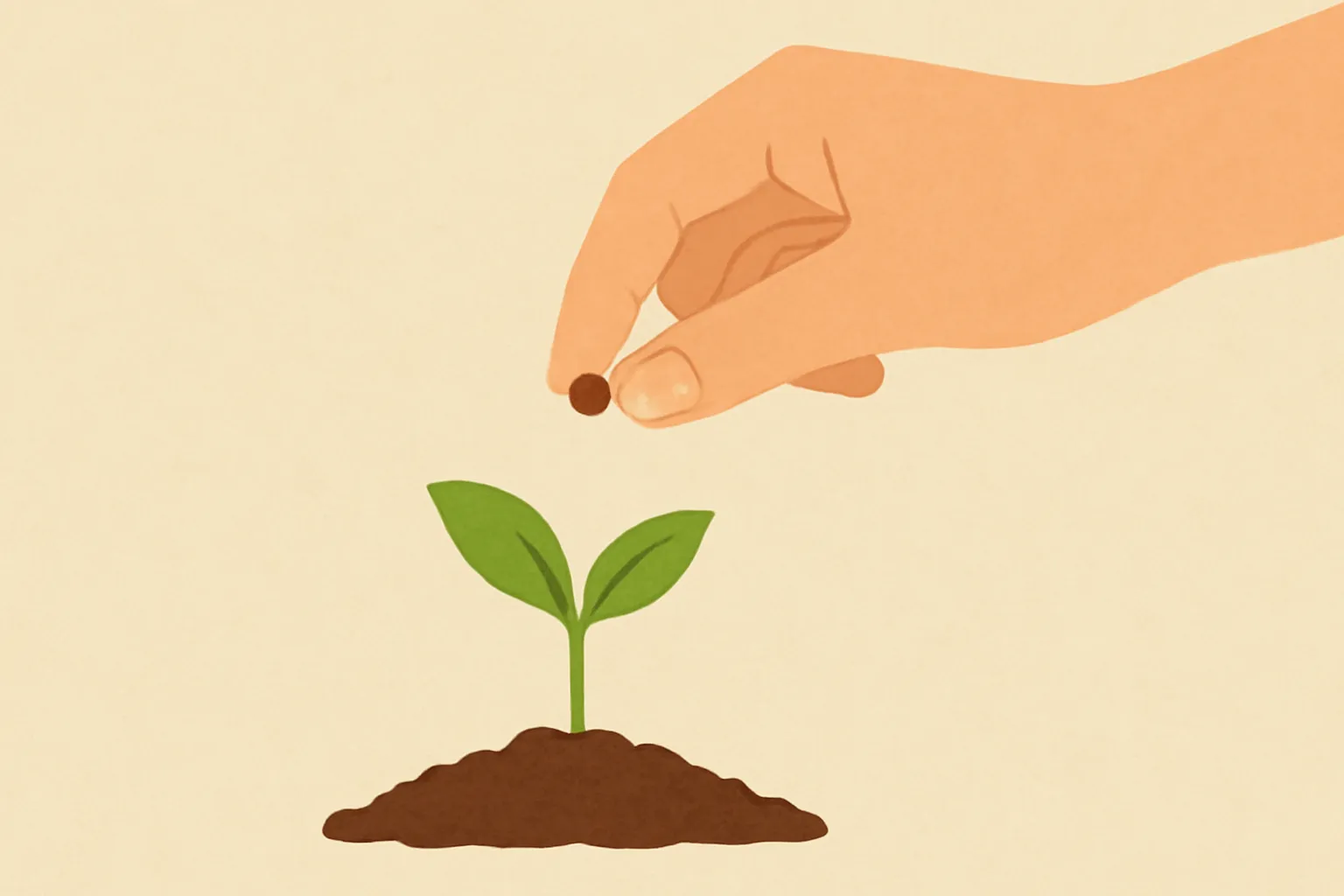
A central question is not whether a seed exists, but what helps it sprout. The journey from a grain of faith to a thriving practice involves four interconnected movements: naming the seed, creating the soil, watering with action, and inviting others to witness and participate.
1) Naming and Clarifying the Seed
The first step is to explicitly identify what you believe and why it matters. A clear seed protects you from vague hope and helps translate belief into concrete steps. It can be autobiographical (what you want to become), relational (how you want to relate to others), or aspirational (a goal you want to realize).
2) Creating the Right Soil
Even a perfect seed will struggle without fertile conditions. For belief, soil means environment, routines, and social supports that nurture growth. Consider:
Environment: minimize distractions and create spaces that remind you of your seed’s value.
Rituals: regular practices that reinforce the seed, such as daily reflection or brief acts of service.
Community: surround yourself with people who encourage, hold you accountable, and share similar aims.
3) Watering with Action
Faith does not grow in a vacuum. It needs daily or weekly actions that align with the seed’s intention. Small, consistent steps beat grand but sporadic efforts. This is the essence of the idea that tiny beliefs compound into meaningful outcomes over time.
A seed becomes a tree not only through internal growth but also through external exposure. When your belief leads to tangible results, it invites others to engage, learn, and perhaps plant their own seeds. Community and shared practice turn solitary hope into collective momentum.
Science and Spirit: Why Tiny Beliefs Can Multiply
The metaphor of seed growth has echoes in science as well as in sacred texts. Across disciplines, there is a shared sense that small, well-directed inputs can produce disproportionate outcomes. Here are three domains where the seed principle resonates:
Psychology and behavior change: The concept of self-efficacy—the belief in one’s ability to succeed—predicts persistence and achievement. When people experience even small wins, their confidence grows, making future efforts more likely to continue.
Habit formation: Research on routines shows that tiny consistent actions, performed daily, rewire neural pathways and become automatic over time. A momentary decision to act today becomes a habit that shapes a life.
Neuroscience: Plasticity in the brain means that repeated practice strengthens connections. A small practice or belief, reinforced over weeks and months, can change how we think, feel, and respond to the world.
Beyond biology and psychology, the seed metaphor offers a framework for ethical and spiritual formation. It invites people to invest in interior transformation that translates into visible outcomes—improved relationships, better stewardship of resources, and a larger sense of purpose.
Practical Guidelines: Growing Your Seed of Faith
The following practical guidelines translate the metaphor into actionable steps that you can apply today. They emphasize accessibility, inclusivity, and adaptability to different traditions and life stages.
Define your seed precisely. Write a sentence or two that captures what you believe and why it matters. This clarity acts as a compass during difficult days.
Set micro-goals. Break the seed into small, doable actions. For example, if your seed is to cultivate compassion, a micro-goal might be to ask one open-ended question in a conversation today and really listen.
Create consistent rituals. Choose a brief daily or weekly practice—journaling, mindful breathing, or a brief service activity—that anchors your seed in routine.
Monitor progress. Keep a simple log of actions taken and reflections about what worked, what didn’t, and why it matters.
Invite accountability. Share your seed with a trusted friend or mentor who can offer encouragement, ask hard questions, and celebrate small victories with you.
Protect the soil. Minimize competing beliefs and distractions that erode your commitment. Create physical and social spaces that honor your seed’s integrity.
Celebrate micro-wins. Acknowledge and savor small breakthroughs to reinforce motivation and resilience.
Scale gradually. When a micro-goal becomes routine, add a slightly larger step, continuing to keep the pace manageable and meaningful.
These steps form a practical loop: seed → soil → water → growth. At every moment, you are both caretaker and student, learning how your interior conviction translates into exterior realities.
Different Names for Faith: Variations and Synonyms
People speak about belief and trust using many terms. While the language may differ, the underlying dynamic is similar: interior conviction that informs outward action. Here are some variations and how they relate to the mustard-seed idea:
Faith as a steadfast orientation toward what is hoped for, even when evidence is limited.
Belief as a cognitive assent that a proposition or possibility is true or valuable.
Trust as the relational willingness to rely on someone or something beyond immediate control.
Hope as the emotional readiness to desire a favorable outcome and to work toward it.
Conviction as a firm commitment to a course of action despite obstacles.
Confidence as a measured belief in one’s abilities to meet a challenge.
Assurance as a sense of security that one’s seed has value and viability.
Each term points toward the same generative pattern: an inward stance that becomes outward behavior, a seed that proves its worth through cultivation and consequence. The mustard-seed principle invites us to honor these forms of faith as living processes rather than abstract ideals.
Common Obstacles and How to Overcome Them
The journey from seed to tree is rarely linear. Several obstacles commonly appear, especially when the seed is new or when life grows crowded with competing demands.
Doubt and skepticism: It can feel safer to wait for certainty. Counter this by acknowledging doubt while continuing to act on your seed in small, concrete ways.
Impatience: Expecting quick growth can lead to discouragement. Remember that the longest-lived oaks began as modest acorns; patience is a form of care for your seed.
Distraction: A noisy environment can drown out a quiet seed. Create focused times and places for your practice, even if they are brief.
Isolation: Belief can feel fragile if practiced alone. Seek community where honest feedback and mutual encouragement are present.
Misalignment between belief and behavior: It’s easy to say you believe something yet act differently. Use accountability to align daily actions with your seed’s intent.
The antidote to many obstacles is clarity paired with consistency. When you know what you stand for and commit to small, repeatable steps, you create a self-reinforcing cycle that sustains even through hardship.
Real-World Tales: Tiny Seeds That Became Big Outcomes
History and personal experience offer countless stories in which a small seed of faith, planted at the right moment, produced transformative outcomes. Here are a few illustrative patterns you may recognize:
Everyday heroism: A person decides to show up honestly in one difficult relationship. Over weeks and months, trust grows, communication improves, and the relationship reaches a healthier equilibrium.
Habit cascades: A student commits to ten minutes of focused reading each day. After a year, reading speed, comprehension, and curiosity increase, opening doors to new opportunities.
Community uplift: A neighborhood group starts with a single neighbor volunteering to organize a cleanup. The effort spreads, inspiring broader civic engagement and improved public spaces.
Entrepreneurial micro-wins: A founder tests a minimal viable product, learns from early feedback, and iterates. A sequence of incremental improvements leads to a sustainable enterprise.
Spiritual and moral formation: An individual commits to a small daily practice of gratitude or compassion, leading to a shift in priorities and a more generous lifestyle.
In each case, the seed was not a guarantee of miraculous change, but a reliable starting point. The growth that followed depended on ongoing care, receptive surroundings, and a willingness to act in alignment with the belief.
Faith and Community: The Garden of Collective Belief
A seed’s success is rarely guaranteed in isolation. Humans are social creatures, and the garden metaphor—where seeds need soil, sunlight, water, and mutual care—helps us understand how collective belief works. Communities can magnify individual seeds in several ways:
Shared purpose: A common seed, shared values, and clear goals keep people focused and energized.
Accountability networks: Peers, mentors, and allies help keep actions aligned with beliefs, reducing drift toward cynicism or paralysis.
Resource pooling: Collective effort allows small acts to yield bigger results, such as community gardens, cooperative projects, or social services.
Public testimony: When people share small victories publicly, it legitimizes the seed and invites others to participate.
The mustard seed becomes a symbol of communal cultivation—the idea that even the most modest seed can contribute to a larger canopy when tended with care, shared growth, and mutual support.
Historical and Cultural Perspectives on Seed Faith
Across cultures and religious traditions, seeds serve as enduring symbols of potential, patience, and responsibility. In many spiritual paths, planting seeds of virtue, compassion, or service is seen as an act with moral gravity, because it puts intention into motion and invites transformation over time. The mustard-seed metaphor often appears in sermons, essays, and classrooms because it bridges abstract ideals and practical living.
While the specific imagery may vary (for some, a grain of millet, for others, a seed of a tree), the core message remains similar: small, faithful acts, repeated over time, accumulate into meaningful consequence. This universality makes the seed principle a useful teaching tool for diverse audiences seeking greater integrity, resilience, and impact.
Common Misunderstandings Refuted: The Seed Is Not a Shortcut
Some readers worry that the mustard-seed idea encourages passivity or naive optimism. It does not. The metaphor emphasizes disciplined cultivation rather than magical thinking. A few clarifications:
Small does not mean passive. A seed requires deliberate planting, care, and protection.
Growth is not guaranteed. We can influence conditions, but outcomes depend on multiple factors, including time, environment, and complexity of life.
Faith is a practice, not merely a sentiment. It is proven by consistent action and real-world effects, not just feelings or hopes.
When understood this way, the seed principle becomes a disciplined pathway for turning intention into durable change.
Technology, Education, and the Seed Model
The mustard-seed metaphor also translates well into contemporary contexts like education, technology adoption, and organizational change. Consider how tiny pilot programs can demonstrate feasibility, building confidence and funding for larger initiatives. Or how a microlearning module can seed long-term knowledge growth in a workforce. By starting small, using measurable metrics, and scaling cautiously, institutions honor the seed’s logic: small inputs, steady nourishment, and sustainable expansion.
Education: A single concept mastered today expands a learner’s capacity to understand more complex topics tomorrow.
Tech adoption: Early adopters provide feedback and legitimacy that catalyze broader use and refinement.
Organizational change: A pilot project demonstrates value, reduces risk, and justifies a wider rollout.
Ethical and Spiritual Reflections on Growing Faith
The seed of faith invites ongoing reflection about purpose, responsibility, and interconnection. Ethical practice asks: If a tiny belief grows into something powerful, what duties accompany that growth? Practical considerations include:
Humility: Acknowledge that growth often comes through others’ contributions and that learning continues beyond one’s own seed.
Compassion: Use growing belief to serve others, not to isolate or dominate; a thriving belief should elevate the common good.
Integrity: Align actions with stated beliefs, especially when it is costly or inconvenient.
Sustainability: Ensure that growth does not exhaust or deplete resources, relationships, or environments.
In this sense, the mustard-seed metaphor also carries a social ethic: small commitments, kept with care, can nurture relationships, communities, and ecosystems in ways that are profoundly transformative for more than one lifetime.
Tenderly Nourishing the Seed
The idea of faith like the mustard seed is not a promise of instant miracles, but a reminder of potential made visible through steady cultivation. A tiny belief that is planted with intention, watered with consistent action, and protected from corrosive doubt can expand into a canopy of hope, service, and tangible outcomes. Whether you approach this metaphor through a religious lens, a secular framework, or a personal philosophy, its practical value remains clear: start small, tend faithfully, and invite others into the process.
If you take away one core message from this exploration, let it be this: the strength of faith is often measured not by the size of the seed you begin with, but by the care with which you cultivate it over time. In a world that prizes grand gestures, the quiet discipline of seed-watering—one mindful action at a time—might be the most profound form of courage we can practice.
May your seed of belief find fertile soil, your habits grow with consistency, and your heart remain open to the miraculous that emerges when tiny things are tended with love and perseverance.