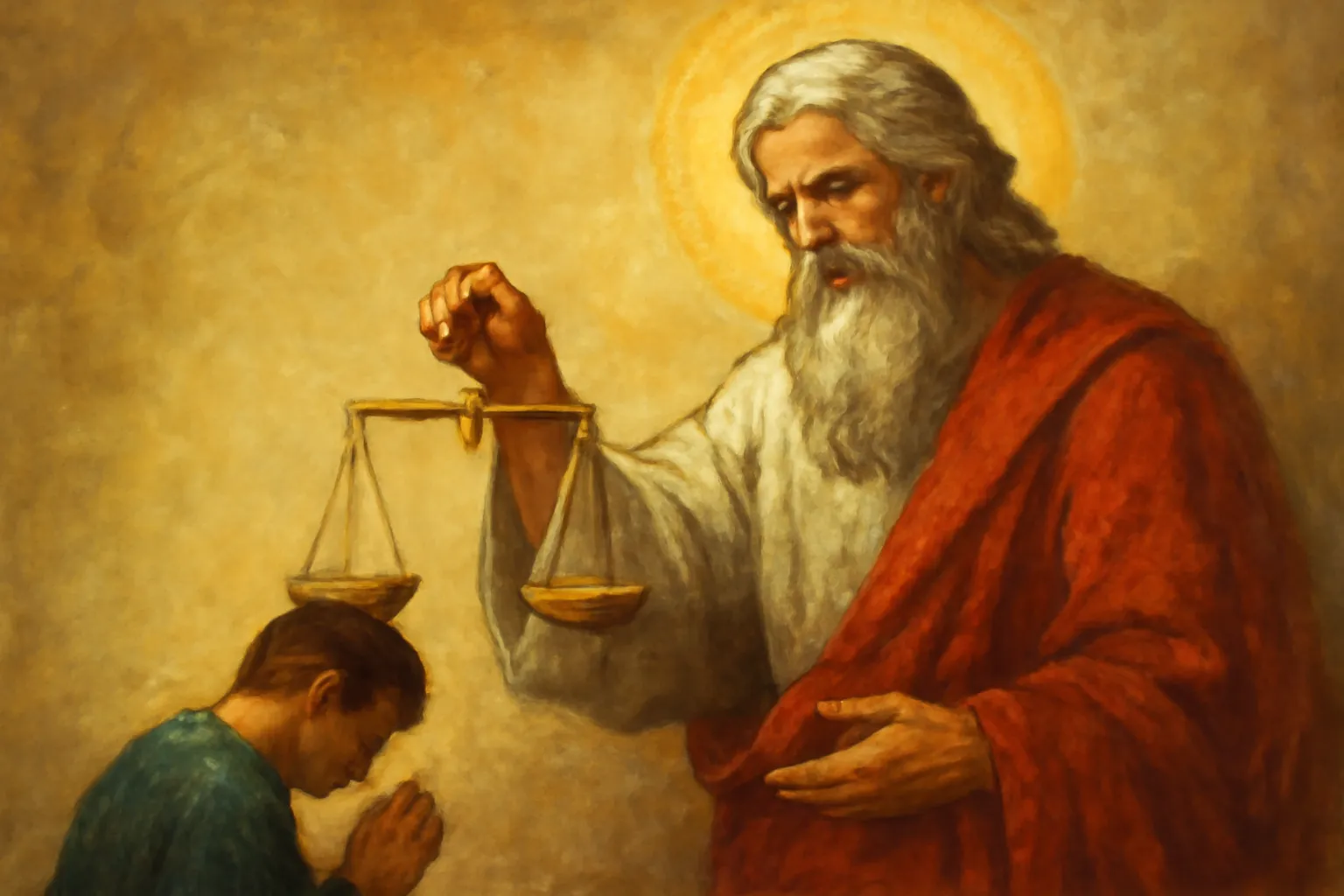
In the biblical narrative, God’s justice stands as a foundational attribute that governs how He relates to humanity, how nations are judged, and how individuals are held accountable. The Bible presents justice not as a cold abstraction, but as a living reality woven through creation, covenant, prophecy, the gospel, and the final judgment. This article gathers essential passages that illuminate God’s righteousness, divine judgment, and the gracious economy by which justice and mercy meet.
If you are seeking a cohesive framework for understanding how the Bible treats divine justice, consider how these verses describe four interlocked realities: (1) God’s character as perfectly just, (2) the standard by which He judges, (3) the ways in which justice is enacted in history and salvation, and (4) the call for humans to respond with justice, mercy, and faith. The passages below show how justice is not merely punitive but restorative, not merely punitive but redemptive, and not merely future but present in God’s dealings with people today.
Framework for Understanding: Core Themes in Scripture
The Bible treats justice in several interrelated ways. Some key themes recur across both testaments:
Righteousness as God’s standard: He is perfectly right in all His ways, and His judgments reflect that integrity.
Equity and impartiality in judgment: God judges without favoritism, weighing deeds and motives alike.
Mercy accompanying justice: Divine justice is inseparable from grace, so that mercy can triumph without compromising righteousness.
Corporate and personal dimensions: Justice addresses individuals, communities, leaders, and nations, often calling for repentance and transformation.
Ultimate fulfillment: The Bible points to a final, universal reckoning where God’s justice is fully revealed and vindicated publicly.
In the pages that follow, you will find variations of how scholars and readers interpret and apply these themes, with short verse echoes to help you locate the passages in your own study of Scripture.
Old Testament Foundations: The Groundwork of Divine Justice
Deuteronomy 32:4 and the Firmness of God’s Judgment
A centerpiece for the patience and perfection of God’s justice is found in the opening lines of the song of Moses: “He is the Rock, his work is perfect, for all his ways are judgment.” This description anchors the idea that God’s judgment aligns with flawless character—truthful, trustworthy, and right in every circumstance. It also sets the tone for a covenant history where God’s acts reveal His identity as just and faithful.
Psalms: Justice, Righteousness, and the Character of God
The Book of Psalms repeatedly returns to the theme that the Lord loves justice and that His governance over the world manifests steadfast love and righteousness in harmony.
Psalm 33:5 emphasizes that “the earth is full of the steadfast love of the Lord.” Yet it also notes that the Lord loves righteousness and justice, tying moral order to cosmic order.
Psalm 9:7-8 proclaims that “the Lord shall endure forever: he hath prepared his throne for judgment. And he shall judge the world in righteousness.” Here justice moves from abstract attribute to concrete action over all creation.
Psalm 96:13 calls for reverent anticipation as the Lord approaches to judge the earth: “before the Lord, for he comes to judge the earth.” The imagery links justice to universal discernment and truth-telling.
Prophetic Warnings and Calls to Justice
The prophetic books sharpen the moral diagnostic tools for nations and communities. They reveal how neglecting justice invites consequence, while obedience to God’s standards invites restoration.
Isaiah 1:17 urges, “Learn to do good; seek justice, correct oppression; defend the fatherless, plead the widow’s cause.” The call integrates personal virtue with social responsibility.
Amos 5:24 declares, “But let justice roll on like a river, righteousness like a never-failing stream.” A vivid metaphor for unceasing divine and human justice that breaks through injustice.
Micah 6:8 sums up the ethical demand: “to act justly and to love mercy and to walk humbly with your God.” Justice, mercy, and humility are inseparably linked in practical living.
Additional Prophetic Voices: God’s Justice in Judgment and Restoration
Nahum 1:2 speaks of God as “jealous and avenging”, underscoring the seriousness with which He defends true worship and ethical order.
Habakkuk 1:13 reminds readers, “Your eyes are too pure to look on evil; you cannot tolerate wrongdoing.” This underscores the necessity of justice in God’s sight and the call for trust even when His timing isn’t obvious.
Wisdom and Psalms: The Language of Justice in Everyday Life
Wisdom Literature: Interpreting Justice through God’s Worldview
The Wisdom books connect justice to how people think, speak, and act. The righteous life is portrayed as a reflection of a trustworthy God, and the wise person or community seeks not only personal virtue but social equity.
Representative Verses and Their Echoes
Psalm 37:28 states that the Lord loves justice and will not forsake His saints; “they are preserved forever.” This gives assurance that divine justice safeguards the vulnerable and upholds covenant faithfulness.
Psalm 82:3-4 exhorts, “Defend the weak and the fatherless; uphold the cause of the poor and the oppressed.” The call to social justice is framed as fidelity to God’s character.
New Testament: The Gospel, the Church, and Final Justice
Christ, the Fulfillment of God’s Justice
In the person and work of Jesus, justice takes on a concrete, relational form. The gospel presents Jesus as the one who accomplishes justice through his atoning work, reveals the depth of human need, and expands the scope of God’s righteous rule to all nations.
Romans 3:25-26 explains that God “display[ed] his righteousness at the present time, so as to be just and the one who justifies those who have faith in Jesus.” Here justice and mercy meet in the gospel’s center—redemption without compromising divine standards.
Romans 12:19 counsels believers not to seek revenge: “Do not take revenge, my dear friends, but leave room for God’s wrath.” The justice of God, not human judgment, governs ultimate outcomes.
2 Thessalonians 1:6-7 affirms that “God is just: He will pay back trouble to those who trouble you and give relief to you who are troubled.” The assurance of future vindication anchors perseverance in hardship.
1 Peter 1:17 notes that the Father “judges impartially according to each one’s deeds.” The divine standard applies to all, without partiality.
The New Testament deepens the expectation of a decisive, universal judgment where God’s justice is publicly demonstrated and vindicated before all creation.
2 Thessalonians 1:7-9 pictures a day when the Lord returns to bring relief to the afflicted and to punish those who do not know God or who do not obey the gospel: a sober reminder that divine judgment will be comprehensive.
Revelation 16:7 declares, “True and just are your judgments, O Lord, the Holy One.” The ending of the biblical story emphasizes the integrity and perfection of God’s justice on a cosmic scale.
Revelation 19:11-16 presents Christ as the rider on the white horse, whose judgment is universal and whose righteousness reigns over all nations.
Ethics in Light of New Testament Justice
The gospel reframes how believers live before a just God. The New Covenant calls for the renewal of the mind so that justice and mercy govern daily decisions, interpersonal relationships, and structures of authority.
James 2:1-13 warns against partiality and insists that “mercy triumphs over judgment.” This is a practical reminder that genuine faith expresses justice in action toward the vulnerable and marginalized.
Hebrews 10:30-31 reminds readers that “the Lord will judge his people”, a sobering call to steadfast faithfulness and integrity in the face of trials.
Practical Implications: How to Respond to God’s Justice
How a Community Practices Justice
The biblical call to justice shapes worship, policy, and everyday acts of mercy. Communities that embrace God’s justice seek fairness in governance, protect the vulnerable, and pursue reconciliation across social divides.
Worship and justice: Worship that honors God’s justice will cultivate genuine concern for the oppressed and a commitment to honest, ethical leadership.
Food, labor, and care: Biblical justice includes care for workers, fair wages, and protections for the poor, reflecting the conviction that God’s world is right when people are treated with dignity.
Mercy with truth: Mercy must be yoked to truth—not softening standards, but elevating mercy to meet human need in meaningful ways.
Personal Responsibility: Living Justly in Daily Life
Individuals are invited to align their lives with the justice of God by imitating Christ in humility, seeking reconciliation, and speaking truth with love.
Honesty in business, school, and home reflects the integrity of a just God.
Equity in how we treat others—without favoritism—mirrors God’s impartial standard.
Compassion toward the vulnerable—the widow, the orphan, the immigrant—echoes both mercy and justice in action.
Interpreting Difficult Texts: The Tension between Justice and Suffering
Readers often encounter difficult questions about how God’s justice relates to suffering, evil, and the present brokenness of the world. The Bible offers a way forward by affirming that justice will prevail in God’s timing, while also inviting trust that God’s purposes include mercy, redemption, and restoration for those who trust Him in faith.
Questions for Reflection and Study
What does it mean that God is just in everyday life, not only in eternity?
How do we balance justice and mercy, both for individuals and communities?
In which verses do you see a connection between righteous living and social responsibility?
Justice: In Scripture, a reliable order of peace, fairness, and righteousness whereby God governs and calls people to live in accord with His standard.
Righteousness: The quality of being morally right according to God’s standard; a core attribute of God and a goal for human living.
Judgment: The act by which God assesses and responds to deeds, motives, and systems, often leading to correction, discipline, or vindication.
Mercy: Compassion shown by God that withholds deserved judgment and offers grace and restoration to the undeserved.
Final judgment: The ultimate, universal reckoning in which all humanity will be evaluated by God’s standard and His justice will be publicly proven.
The Integrated Picture of God’s Justice
Across the Bible, God’s justice is not a distant principle but a present reality that relates to creation, covenant, prophecy, and the life of Jesus and His church. From the firm justice of the Old Testament Rock to the mercy-filled, redemptive justice of the gospel, the biblical witness invites readers to trust in a God who is both perfectly righteous and deeply merciful. By meditating on the verses shared here, you can grow in understanding how divine justice shapes belief, informs behavior, and fuels hope for the world to come.
If you want to explore further, consider studying these passages in their larger contexts, comparing translations, and praying for discernment about how to apply the principles of justice and mercy in your own life, your family, and your community. As the biblical story continues to unfold, the call remains clear: pursue justice in a way that reflects the steadfast love of the Lord and the truth of His Word.